Happy Birthday To Me!


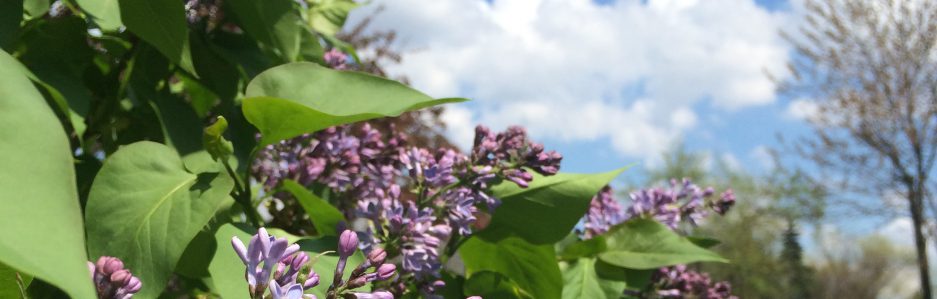
I took a walk today, for my thirty-eighth birthday, since it was beautiful out and all the flowering trees are in bloom.

It dawned on me that this, today, this walk, was a good example of what life is like with chronic illnesses, a good illustration that may clear up some misconceptions.

I am very allergic to spring pollen. Right now my chest feels tight and congested, my throat gummed up and my body generally achy. I could stay inside with all the windows shut-that would make my physical suffering considerably better. Some days, when life is stressful, I choose to do so because dealing with feeling miserable all the time (even with medications) can be hard. My life indoors is still full and interesting. There are still movies and music and books and food and cuddling and crafts and games that I can enjoy locked away from the outside world.

Some days I want to expend the effort to be in the middle of of these beautiful things that make my life demonstrably harder. Literally, these gorgeous temporary blooms make my skin itch and my eyes water and my head hurt. But it is worth it, sometimes. It is worth the extra discomfort to get to enjoy something that is outside of my comfortable realm. I just celebrated Easter and a beautiful wedding on the same principle-the discomfort of knowing I might feel rough from overexertion was worth it to see family and to celebrate with them. But I did end up feeling very rough.

Just because I am happy, and happily occupied, doesn’t that I am suddenly healthy and well. Almost 100 percent of the time I feel at least a little ill, and the majority of the time I feel sick (maybe nauseous, maybe weak, maybe in pain, maybe just congested and stuffed up). I look well because the markers we use to figure out if someone is sick-a green pallor, a disheveled appearance, a frown, an inability to do the activities we want to do – are often absent when I am doing something I enjoy. So people mistakenly think I’m healthy.

And just because I feel sick in the middle of a happy occasion doesn’t mean I am automatically sad. When generally healthy people feel sick, they (for the most part) stop everything. Normal life is put on hold, and when you have the flu or a cold you give yourself permission to just feel bad. When you feel better you go back to normal activities. There is a separation between the two worlds-one is full of rest and recovery and feeling both emotionally and physically down, the other is full of activity and fun and feeling emotionally and physically up. For chronically ill people there is no clean division. I can be physically very unwell but still emotionally very happy. I can be physically well and emotionally unwell. Sometimes I do get upset about my limitations when something I want is outside of my reach. Sometimes I push my limitations as far as they will stretch to bring something I want in reach and pay the price later. But my life isn’t a stunted or limited one.

As long as I have agency over what I do, I get to decide for myself what I am or am not capable of at any given time, I have a good life. Not an easy life, no, but a good one. This is unthinkable to people sometimes, that its possible to have a good life in the middle of illness or disability. It leads to misunderstandings. I hope I can clear some of that up.

I was brilliantly happy to take a walk through my neighborhood today, snapping pictures of all the flowers, breathing in the scent of lilacs.

I also feel like I have a brick sitting on my chest, and I could use some ibuprofen and caffeine to combat this headache I’m getting. Or am I feeling worse because I ignored my hypoglycemia guidelines and had a cinnamon roll for breakfast and need some protein? Is it allergies or fibromyalgia making my neck hurt?

No matter, I have a birthday/therapuetically-necessary-every-six-to-eight-weeks massage scheduled for tomorrow. And a dairy-free dessert to make for myself for later.
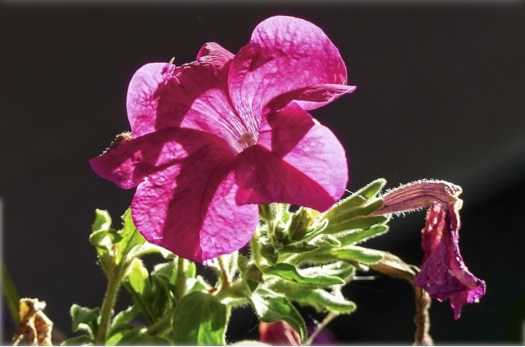
Loser

wilted-flower

I have been meditating on the idea of loss this morning. Fear of loss, the imagined specter of what might be, is horribly powerful. The fear of attack, the fear of hunger, the fear of oppression, the fear of disability, the fear of failure, the fear of war. The loss of dreams, loved ones, security, ability.

What is one of Donald Trump’s greatest insults, one he uses all the time?

Loser.

We are terrified of loss, and terrified that that loss will define us in ways that make us less than. Others will see the taint of loss in us, and we will no longer be good enough, worthy enough.

Failures of empathy are often failures of imagination, we do not want to imagine how horrible it would feel to sit with the losses that other people do. It seems contagious. This is why many people shy away from the grieving, or take up protective denial at how bad a situation is. Truly understanding what someone else is going through makes us acutely aware that it could happen to us, and that is frightening.

Life is frightening, and having evidence at our fingertips that it is capricious is more so. Some people want to believe that when misfortune happens the unfortunate person brought it upon themselves-poor choices, lack of faith in God, excessive vices, ignorance. Some people don’t want to believe the situation is as bad as it seems-they diminish someone else’s hardships as a way of distancing themselves.

Those of us who have felt loss that was stinging and life-altering will wonder for a long time if we did something to cause it, we hide how bad it was away from our loved ones out of compassion as we don’t want you to feel frightened. But, if you have felt deep loss, deep oppression you know in your bones that Trump’s assertion is all a lie. Experiencing the losses of life are not indicative of your worth as a human being, they are an inescapable part of being human.

We can compound the effects of loss upon people by being too frightened to face it, to look it in the eye. And if you have yet to really experience loss you will be even more frightened. This is where privilege comes in. I had the privileges of being white, straight, middle class, educated, thin enough, pretty enough, Christian enough, free from sexual abuse. By the time I got to college, I had two beloved grandparents die, and that was the most I really knew of loss. And my fear of losing anything was palpable, it felt, at the time unendurable. When you haven’t lost much yet, losing feels like it will be worse than death.

On the other end of the spectrum are people who have had more than their share of loss, and looking at other people’s losses might sink them with the weight of all the unfairness of the world. Adding other people’s losses onto their hearts is too great a burden, and they may turn away.

Loss is something we will all have in common, if we don’t already.

To have a leader who looks at anyone who has ever lost anything as a “loser”, with all the degrading connotations that implies, is unconscionable. If that was the only despicable thing he had ever done, it would have been enough for me.

Although, I suspect he is more frightened of loss than any of us will ever be. He has done everything in his power his entire life to ensure he never has to endure the sting of loss even once. And his lack of human feeling matches the measure of his fear of being a “loser”.

The antidote, the key to empathy, the key to really understanding and alleviating suffering, is then bravery. Facing down your fear that something horrible will happen, because if you live long enough something always will, is imperative. Difficult and excruciating, but imperative. Face your fear of loss with as stout a heart as you can, knowing that this scares every single one of us, too. Then we can actually take practical steps to truly help each other

Why My Posts Have Been Sporadic Lately

sky.JPG

My posting on the blog has been a bit dodgy this summer (dodgy, huh, I must be reading too much Harry Potter with the boys). Sometimes, in the past, less-than-consistent posting has meant good things are happening (feeling healthy, vacation, etc.) and sometimes that has meant bad things are happening (you know, feeling sick and such). This time around it has meant something different, something I have never attempted before.

I am working on writing an entire book, and it scares the bejeezus out of me.

80,000 words is a fairly standard length for a collections of essays or memoir. My goal is to get at least those 80,000 words into a first draft by next summer. I began about a month ago. So, three hundred words at a time I have plugging along with occasional super productive days of 600 words. This gives me weekends off and is achievable even on bad health days (like earlier in this week I had written about 500 in the morning and spent the afternoon in the ER with shortness of breath). Which is really important considering…

It is going to be a collection of essays around what it is like to be one of those people who floats on the edge of healthy and sick all the time. It will have episodes that illustrate what the depths of brain fog feel like, what being in pain does to your ability to parent, how hard it is to get dairy-free food in Wisconsin. Some chapters (like that last one) are sillier than others. It alternates between the hard and the easy, just like my life does. The tough ones take it out of me as I relive times when I felt overwhelmed and uncertain and scared. And as anyone who ever did theater knows, making someone laugh can be harder than making someone cry, so the goofier chapters aren’t a walk in the park either. It is kind of more exhausting than I had anticipated!  At any rate, it certainly wouldn’t do to sacrifice the healthy days I have overextending myself writing too much at once. That would be quite self-destructive.

There is also the emotional tightrope I’ve been walking daily between anxiety and audacity, humility enough to say, “This isn’t working” and the confidence enough to say, “Now this is working!” Not going to lie, it is messing with my head. It is simultaneously as terrifying as jumping out of an airplane and as boring as a 1.2 on a treadmill facing a brick wall. I am beat tired.

So there have been fewer other posts. I have some in the works – I want to write about our glacier tour in Alaska, about the beginning of the school year, about a Little House on the Prairie Cookbook – but it is going to be slow going.

Thank you for your patience and understanding!

Now if you’ll excuse me, I am off to calculate how many words I have written so far against my goal total…

Dang, only five percent.

But that’s a lot higher than zero!

Traveling While Chronically Ill

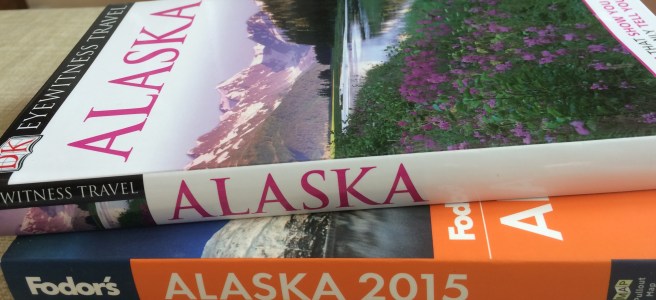
Alaska Books

This trip was supposed to happen last year. We wanted to go to Alaska last summer, but we didn’t. The reason sounds spoiled and selfish when I explain, “Well, we didn’t have quite enough frequent flier points to fly first class, so we waited another year.” I sound like a twit. But I really struggled with being okay with flying six and a half hours without guaranteed food, without a guaranteed bathroom, without space to stretch. I have chronic illnesses and I can only push myself so far before I collapse.

It happened when we went to Puerto Rico two years ago. A four and a half hour flight with barely any food left me feeling sick, so sick in fact that my body cramped and lurched in the hustle of a 90 degree airport and I nearly passed out when we finally stopped and ate. On that same trip, which I do recall happily as one of my favorites, I threw up one meal where I was assured there wasn’t any dairy (but I’m pretty sure there was), and had to turn around on a rain forest hike because I felt like I couldn’t breathe from anxiety and humidity. I spent a lot of afternoons recovering from busy mornings.

Last year, in Wisconsin, I had to take an impromptu walk when my muscles cramped up so painfully I was going to get a migraine. A few times I had to prepare and drink a protein shake in the middle of the night because my blood sugar went too low.

Three years ago in Kentucky I was up in the middle of the night crying because my body hurt so much.

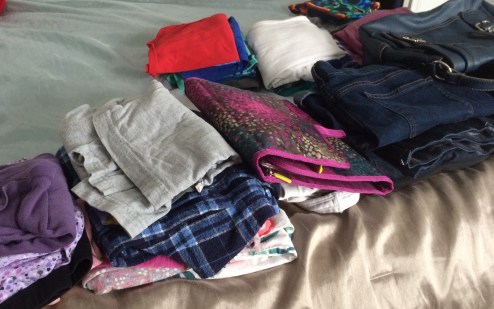
I am packing for Alaska now, and each item I put into a suitcase reminds me that I have to plan for the inevitability that at some point on this trip, my body or my mind will fail me. It is going to happen.

I keep my prescription medications, glucose meter and supplements in my carry-on bag. I cannot afford to lose these items. Also in the carry-on will be a 12-pack of dairy-free protein bars that can act as meal replacements or a quick fix for low blood sugar in an emergency. One of my few precious fluid ounces will be my Flonase.

One of our large suitcases holds winter jackets, gloves and hats. In some parts of Alaska it’ll be in the fifties and rainy, and my body cramps up wildly when the temperature drops too quickly. My ergonomic pillow will also be in that bag, so that I don’t wake up with back spasms each morning.

One bag will contain our guidebooks in which I have researched which restaurants near our hotel will have a diverse enough menu that I have a chance of finding dairy-free food. I have a grocery list and the address of the nearest Anchorage Target ready for when we land so that I can get enough non-perishable snacks to last me on a twelve hour bus tour of Denali and a 6 hour glacier tour out of Seward (lunch will be provided, but of course it all has dairy and if I go too long without eating at all I might pass out).

I bought seasickness bands for all of us because we’ve never been on the open ocean and I can’t handle being sick for 6 hours at a time.

We have backpacks, but I have to make sure I don’t overload mine, or my shoulders will cramp.

I can’t wear flip-flops anywhere where we will have to walk a long time, because my legs will cramp and my feet won’t uncurl.

I need to have ibuprofen available at all times, because even a storm rolling in can push me into severe pain  (I have been checking the weather obsessively to try to steel myself).

I will bring make-up because there will be times I get very sick, and I don’t want to look very sick in our vacation pictures forever and ever.

I will bring my notebook with all of our information everywhere we go, because when I feel sick sometimes my brain goes foggy. When that happens I can’t remember simple words, nor can I figure out how to navigate my normal life much less a brand new environment. Knowing my brain is unreliable is scary, and then my anxiety kicks in making it even harder to take care of myself and small children.

Sigh.

All in all it sounds as if traveling is more trouble than it is worth. But if chronic illness has taught me anything it is that anything you want in life is going to take work. An uphill battle just means that the view from the top of the mountain is going to be that much more spectacular once you get there.

Puerto Rico was amazing and tropical.

Wisconsin gave me time when I could just enjoy being with my kids without nagging them about cleaning up toys or doing homework.

Kentucky gave me a chance to see family I love dearly and wouldn’t get to otherwise.

And Alaska? I have never had the chance to see anything like it. I don’t live near mountains, or the ocean, or moose or bears. I might never get the chance to see these things again. I want to see my kids’ faces light up when they touch a glacier, and my husbands eyes widen when he sees an orca. I want to feel the weight of a fishing pole as my son hooks a salmon. I want to smell salt-spray. I want a chance to see Denali.

I want to prove for myself that the trouble, the pain that goes into everyday life, and the pain and trouble of reaching for the extraordinary is always worth it.

Alaska Clothes

An Article on The Mighty

me, boys, flowers

(They ask you to include a picture for The Mighty, and I had no clue what would work with this piece. So, here’s a cute picture of the boys. PS my husband says I’m trying to fool people into thinking I’m younger than I am as this picture is at least 4 or 5 years old.  I told him that strangers have no idea how old the boys and I really are-I’m using it!)


Hello Everybody!

I had an odd writing day yesterday. I had come up with a topic I really wanted to write about: my reaction to hearing often that people with illnesses, disabilities or special needs don’t want unsolicited advice (I have felt that way before) and why we may be missing out by keeping quiet (or insisting that other people keep their thoughts to themselves).

I composed it in a couple of morning hours, did cursory editing and knew immediately that I wanted to get it to The Mighty.  I follow The Mighty on Facebook and love the stories they share about people with all sorts of lives that need a little extra care.  Invisible illness, visible illness, mental illness, disability, special needs.  I felt this was the right placement for this piece and sent it off by 10:30.

By 1:30 I had an e-mail saying it was accepted and by 8:00 at night it was published online.  They move fast!!!

So here it is Why I Want People to Share Stories About Treatment Options.  Hope you are able to check it out.

Thanks!

Kristin

Play

Play

A few months ago I had to put a writing project on pause.

It was going to be an essay about my first year with an undiagnosed pain and fatigue disease. In my head I had named it the year everything almost fell apart. Everything was in tatters, held together with the barest of threads. I felt like, in our little family, that I held all of our lives in my arms, while my body felt like it was literally being ripped limb from limb. My boys were just four and one, and on the heels of the recession my husband was traveling internationally almost every week-making sure to do everything that was asked of him so he could never be seen as expendable.

I paused my writing because I suddenly didn’t have the distance I needed to delve back into that year. A new undiagnosed problem began taking over, and emotionally I didn’t think I could relive “The Year Everything Almost Fell Apart” in real time and in retrospect all at once. I am still undiagnosed, but thankfully have started to be able to manage the problem so that I can get back to normal life.

And the story has started knocking on my door again. It won’t leave me be. The year, the whole year, wants to have its story told. Every time I try to divert my attention to something lighter, something fun or frivolous or at least shinier and less tattered, the year comes back. It looks at me the way my oldest son did at the time, wide eyes, furrowed brow, sadness that shouldn’t weigh down such tiny shoulders, asking me to make sense of everything. To please put life back in order, to explain why and how things went wrong and how to fix them. I couldn’t for him then, but the year is asking me to please do so now, to make amends for failing him.

Notebooks 2010

These are my notebooks from that year. Each post-it note is flagging a journal entry with a clue to my illness. The pages in-between are my journal entries describing the different colors suffering took for each of us, the way thirty-year-olds and four-year-olds and one-year-olds process fear and uncertainty and sadness and anger. It’s time to read them again. It is time to try to tell the story of a year in a few thousand words, so that it can be put on a shelf, ordered and meaningful and done. This will take time, but what choice do I have? The year won’t let me be.

Adrenaline Nights

Blood sugar

I am up again in the middle of the night. That makes, I don’t know, twenty or so nights in a row. It’s the hypoglycemia, low blood sugar waking me up for a midnight feeding and sometimes again at four AM. Like having a squalling newborn. The exhaustion in between feedings makes it almost impossible not to pass out immediately, and on those nights I get more sleep. Occasionally adrenaline has done some of the work to raise my blood sugar for me, but then it keeps me up like I had done moonlit espresso shots. Tonight is an adrenaline night. The first few adrenaline nights, when I think about it now, astound me. Each time I had thought I had heard one of my children yelling for me, a loud “MOM”, the kind that accompanies a kid who suddenly realizes he is going to throw up right that second. I would jump out of bed, run to the boy’s room and realize that both of them were one hundred percent sound asleep. It happened once after I knew I was waking up with lows, and I marveled at my brain’s ability to jolt me awake for my own good. Pretty clever, if you ask me, using auditory hallucinations to ensure I didn’t just slip into a coma.

Adrenaline nights wake you up with a jittery, nervous stomach that make anxiety unavoidable. The hours before you are able to sleep again double and redouble the anxiety, and now you suddenly have hours of insomniac time to fill. All by your lonesome. In a spooky, silent and dark house. With access to Google. The first few adrenaline nights were filled with research, scouring reputable medical sites and not so reputable message boards for the answer to the questions, “Why is this happening to me?” and “What can I do to fix this?” Once my bloodshot eyes burned out from the glare of the computer screen, I would refresh them with copious tears the result of other questions, “What if?” and “Why me?” This cycle sometimes lasts four or five hours, before the adrenaline that woke me really leaves me be.

Time can make it better, experience with the adrenaline nights makes it better. I don’t research anymore. I cycle through Facebook, then Pinterest, then Buzzfeed, then Instagram, then the miniature food jewelry pages on Etsy. After those run out it becomes time for an old DVR’d CBS Sunday Morning, My Grandmother’s Ravioli or Treehouse Masters. Absolutely no news, no doom and gloom, no medical jargon, no negativity. It helps.

What also helps is just knowing the moment has come when I am no longer the only one awake in the house. Several times I have been able to fall into a deep peaceful sleep the moment my oldest padded downstairs, said hi and then asked to play on the iPad. Or when my youngest has begun to realize that if he wakes up in the middle of the night I am more likely to be downstairs on the couch than I am in bed, and a few times has snuggled up with me and we’ve both been able to fall back asleep.

I don’t think tonight will work out, though. I have to fast for a blood test, one that might give me answers if only I can stick it out through the night without eating anything before eight in the morning. They asked for ten hours without food, when the longest I have managed in months is six. Adrenaline already woke me up at 12:30, and I have only had two hours of interrupted sleep so far this evening. We will see.

Tiny Bites

big bowl pomegranate

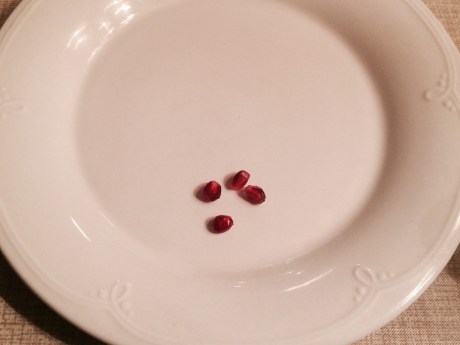
The bowl of little red jewels caught the light, the reward for nearly a half an hour of preparation. Pomegranates require patience. Once scored you can peel back the tough outer layer and begin to use your hands as claws pulling sections apart. Submerging the whole fruit under water, you can delicately loosen the gems from their white pith moorings and let them sink gently to the bottom of the bowl. Some will fall easily without bursting. Some will require finesse, like wiggling a baby tooth loose from pink-red gums. Some arils will split under too much pressure or when they catch the edge of your nail, but there are thousands upon thousands left to pick from. Like fish eggs, we assume so many are created because inevitably so many will be lost along the way. The whole lot is drained though a fine mesh, and the work continues picking out the blemished and the burst, rescuing the ones that need the last bits of white scraped off their bottoms. Then they are ready to eat.

I worried about this Thanksgiving. My body is dysfunctional in that way that means specialist doctors with extensive waitlists, daily confusion as to what healthy can look like for me, the possibility that something is very wrong or that no one will really know what the problem is. Until the cause of that dysfunction is uncovered, most of the canon of holiday food is actively dangerous to me if I lose my inhibitions and eat too much. Candied sweet potatoes and stuffing, mashed potatoes and cranberry sauce, cocktails and pecan pie are only safe for me in .01 parts per million, like arsenic. Turkey and green beans are acceptable. I worried about how empty and sparse my plate would look. That that emptiness might feel so much like sadness, or grief.

I worried that all the time it takes to make all these things, the hours and hours of peeling and mashing and sautéing would feel like masochism. Like deprivation. Like resentment of the people I love for being able to enjoy these things when I couldn’t. I worried that my love of cooking was purely selfish and greedy, that I was able to indulge my gluttony by it, but didn’t enjoy serving other people no matter how much I care for them.

Worse yet, I worried that my family would be able to see the sadness and selfishness flash across my face. The twin commandments I placed on myself, to be truthful and to be loving, were going to be compromised either one way or another. I didn’t want to lie, nor did I want to pout in envy, and I was quite convinced that at least one would be unavoidable.

As I worked through the process of freeing the pomegranate arils with my oldest son, as I shopped and cooked and cooked and cooked, I was happily surprised that I didn’t feel unhappy at all. The work was as satisfying as it had always been. I felt happy to make, and make, and make without hope of more than a mouthful of each treat. Without the expectation of tangible reward. And I was absolutely relieved to find out that I could be content that my loved ones could have something I couldn’t. The frustration I anticipated in myself dissolved before it materialized.

I had a beautifully happy Thanksgiving, where I got to find out that I still love cooking, I still love my friends and family more than my gluttony, I still can enjoy life with just a taste of this or that, I can be more than my self-pity.

Persephone, the goddess of springtime, spends part of each year as the Queen of the Underworld. We have one month of winter for each pomegranate seed she ate while in the keep of Hades, her kidnapper. As I allowed myself just a few arils out of the thousands we harvested for Thanksgiving, I let the juice burst into my mouth one by one. I was happy with my few, and thought ruefully that four months of winter was more than enough. Too many pomegranate seeds and spring might never come again. But the temptation to have at least a few is too much to pass up altogether, especially when winter, in all its coziness and closeness, is pretty wonderful.

4 pomegranates

Pause

pause

Back in August, I had set myself a schedule for writing, that I would complete a 1,500 word essay for the first Wednesday of every month as part of an on-going column. I am going to put that on hold for a little while.

The premise of the column Pain and Joy was that I had learned a lot about all sorts of pain that I’d wanted to share, and that I am learning about joy and want to report on that as well. This month was originally going to be a “pain” installment, specifically “The Pain of Existential Dread”. My original thought was to go into the worry and fear I felt when I was suffering from an unknown illness and detailing how that fear seemed to infect my oldest who was then four. So, five years after this originally happened, I felt like things were under control and I had the distance I needed to tackle this subject. However, five years later I am again in the thick of an unknown illness. I am worried, again, about how severe this new illness might be, about how much my quality of life will be diminished, about how drastic the “cure” will be. I am back in the swamp of not knowing, of waiting ages to see a specialist, and of trying to maintain some psychological buoyancy during the process.

My children (and I bet yours, too) are emotional sponges, and when something is off-kilter they sense it quickly and it colors their world almost immediately. Writing this piece right now feels like the wrong move to make. If I weren’t a parent, delving into my dark fears thoroughly and completely could be cathartic. It would be messy and ugly for a good long while, but it would be over and dealt with. Presenting a polished, articulated version of that fear to the world could open up conversations that I would be able then to discuss and I would not feel as alone. If I weren’t a parent.

I am a parent. There is the reality that if I dig deep into the dark places in my mind that it might be hard to climb back out-certainly not quickly enough to be present, completely present, for my children when they need me. What I learned the first time out with an unknown illness and the prospect of a scary diagnosis is that tears and anger are frightening to my kids, but that emotional distance is even scarier. I cannot be so absorbed in writing this right now, and risk that distance.

Also, immersing myself in this story means that for a while no other stories are being told-not the one about how the squirrels always try to eat the face off our pumpkins, not the one about my youngest child’s very first goal, not the one about how we spent all weekend as a family playing Risk, not the one about how our Christmas lists are coming along. The dominant story of “What will happen to me?” would be the one I would get trapped in, and if I’m trapped there, all of us eventually are trapped there. That isn’t really fair.

So, I have decided to pause the column, for now. I may write the next “Joy” installment. I may not. I might write short frothy pieces for a bit, or short cranky pieces. I may just journal. This illness is making life less predictable than I imagined, so I am going to give myself the grace and wiggle room to ignore self-imposed deadlines and goalposts. I am giving myself the luxury to write what and when and where and how I see fit for a while. That, I think, is something healthy I can do for myself and my family now that my health is suddenly, again, up for grabs.

I’m Fine

I'm fine

My oldest had a rough day at school last year. He ended up throwing up in a bathroom and was weaving around the hallways when a teacher who knew him noticed he looked green. She guided him to the nurse’s office and asked him how he was feeling.

He replied, “I’m fine,” in a nonchalant and off-handed manner. The teacher was stunned and amused, because he obviously was not fine. When she later told me the story of how this had all played out she felt so bad for him, but also thought it was endearingly funny. I did, too.

My youngest has a swollen cheek right now, and we think it’s from a six-year molar coming in and there being a little infected gum tissue. Yesterday he told me his jaw hurt, and when I asked if it still did today he said, “No.” I asked him if he was sure and his answer was, “If I distract myself it doesn’t hurt. As long as I don’t think about it.”

A bit exasperated I pressed further, “If you think about it, how does it feel?”

“It hurts.”

“So it does hurt?”

“Sure, it does. But not if I’m distracted.”

I think this is the legacy of having a parent with a chronic illness.

The boys have seen me throw up suddenly and move on with my day. They’ve known times when I was having trouble walking but still stayed with them at the park after school. They know that a lot of the time I don’t feel great, but I cope as well as I can. They say to listen to your body, and I absolutely do, but I have the added dimension that sometimes my body is a straight-up liar. It sends unnecessary pain signals all the time, it tells me I need a nap when really I need to exercise, it tells me I need tons of sugar when that will make me crash harder. So I ignore it. I power through. I tough it out.

The boys have started to do the same. We use the phrase, “It’s not the end of the world,” a lot in our household, that and, “It could always be worse.” We’ve gotten philosophical about pain and illness around here. I think our collective pain tolerance has gone up, unintentionally, and recalibrated. My oldest started out as a toddler who screamed bloody murder at the smallest scrape, and now throws up and claims, “I’m fine.”

But, surprisingly, now my boys also trust me when I tell them that they should probably stay home from school, or see a doctor, or get a flu shot. They used to try to tough everything out, going to soccer practice with a fever or pushing and crying for a playdate when they had been up coughing all night. They don’t do that anymore. It doesn’t seem heroic, it seems like suffering unnecessarily. Maybe they’re just older and wiser. Or maybe it’s because of what they see.

They see me nap, and rest, and exercise, and check my blood sugar, and prepare healthy food. Taking care of yourself when you are really too sick to power through is absolutely normalized. This is life, this is what people do. We push on when life isn’t that bad, when “it could be a lot worse”. When it gets worse we stop and rest and give our bodies a chance to catch up.

Since I have been having such a dysfunctional time of it with my body, I worried that the boys were going to end up with a dysfunctional relationship with their mostly healthy bodies. One day they will be the only ones monitoring the state of their health or illness. They should be off on their own some time ten or fifteen years from now, without a mom to check up on how they really feel. Luckily, I think we are inching towards balance, and I think that is because they have a sick parent, not in spite of it.