Pain and Joy

willis tower

This essay was intended as the beginning of a monthly column, a pitch for a well-regarded online literary journal.  As I mapped that series out, I decided that these were ideas I wanted to write about regardless of whether they were accepted and published elsewhere.  They weren’t picked up, which is disappointing, but I’ve decided that the first Wednesday of each month will be when I continue the column for myself.  That’s my intention, at any rate, and we will see how that goes.  Thanks!  

My two sons, Nicholas and Christopher, are eight and six respectively. My chronic illness began when Christopher was just a year old, so by all accounts they have known a mother with pain far longer than they have known her without.

The first blood tests were drawn out of my fat, left-arm vein when Christopher was still small enough to fall asleep in his car seat and was portable like a piece of awkward and heavy luggage. Nicholas was squirmy and independent at three, and I couldn’t trust him to not run through the parking lot if I let go of his hand. Christopher swung from my left arm and Nicholas from my right, and I shouldn’t have gotten the three of us from the doctor’s office to our car that way. I bruised an ugly purple in the crook of my left arm later that night.

That was the beginning. Tests for diabetes and allergies and rheumatoid arthritis followed, as well as screenings for ovarian and colon cancer, and an MRI to look for multiple sclerosis. I was eventually diagnosed with fibromyalgia: a disease of exclusion. The answer to my near-constant pain and overwhelming exhaustion was a non-answer because fibromyalgia has no known cause and no cure. The term “fibromyalgia” might really be an umbrella over several linked but separate illnesses, or it might have its own pathology that hasn’t been discovered yet.

For at least five years I fought every day to mitigate the pain I felt and the pain I thought I might be causing them by being a mother who sometimes couldn’t. I fought to minimize our pain as a family and that became my full-time job. I was a stay-at-home mother for both Nicholas and Christopher their wholes lives, but my real work was to track down the root cause of why any of us were hurting.

I have become very, very good at spotting pain from a distance of space or time. I can hear Christopher’s tone of voice change across an entire playground if he is starting to get so agitated that he might hit a friend, and I know that once we have missed three nights of bedtime stories in a row Nicholas’s shoulders will round and slump in defeat and loneliness. I am honed in on pain, and aggravation, frustration and tears and the fleeting expressions that betray those emotions. This was something I could do, I could see pain as clearly as I could see the color of someone’s hair. This was a way I could still help, even from the couch. I had information about how to mitigate pain in many different forms, from migraines and cramping muscle spasms to loneliness and perfectionism. What I didn’t yet know, I found out. What I did wrong, I corrected. What I knew, I shared as often as I could. I found a way to contribute.

Over time, one of my symptoms became more severe. It wasn’t so odd that suddenly my limbs felt like they were filled with sand, but it was odd that it was happening so often. A feeling would come over me that I could not keep my body upright and that I had to lay down immediately. When I realized it was often after I ate, I researched that combination. Reactive hypoglycemia seemed to be the reason why: after eating too much or too much of the wrong foods my blood sugar would spike too high, prompting my pancreas to produce too much insulin which would make my blood sugar sink too far down. Since I have done stranger things than eating small regular meals and avoiding sweets, I decided to try a hypoglycemic diet.

More good days than bad, was how I had been describing my fibromyalgia. But the good days still included wild fluctuations of anxiety and depression. The good days still might mean that I fell asleep on the couch for an hour when I didn’t even realize I was tired at all. The good days meant that I didn’t growl all through soccer practice, but I might growl a lot when the boys took too long in the bathtub afterwards. Then a bad day included a Mother’s Day where Nicholas asked me over and over again what special thing I wanted to do and eventually I hissed at him, “I don’t feel well. I don’t know if I’ll still feel this bad all week and I cannot afford to feel bad all week. It’s my Mother’s Day, what I want is to clean up the kitchen, to put the laundry away, to take care of chores now. I want to know that we’ll be fine for the rest of the week. That is what I want. Is that all right with you?” Something had to change.

I changed my diet, and I felt good. Actually good. It lasted longer and longer. I felt better and better. My good days now included spontaneously taking the boys to the pool and not experiencing the gnawing fear that I wouldn’t have enough energy to now make it through the day. My good days meant fourteen hundred words of writing in one morning, when fourteen hundred would have been a stretch for an entire week. My good days meant I could tickle Christopher and wrestle with him and not hide the tears that would have normally stung my eyes seconds before I would have had to tell him, “I’m so sorry, but I can’t anymore. I’m hurting too much.”

I had lived so long mitigating pain and had become so adept at devising strategies to cope, it was the skill I had honed the most. It was a skill and a body of knowledge I shared with my family and shared with friends and shared with strangers. It became a constant in my life: seeing and helping to ease pain. That was primarily what I did, all day long.

All that time I was a student of pain I wasn’t necessarily a student of joy. I felt fairly certain that joy was, for me, obtainable only in small measures, and I felt content looking for it in small places. On a daily basis joy meant, simply, less pain. If I could achieve that for myself or anyone else I was happy that the limited amount I could do, I did. Now I have passed that limit. I feel much, much, much better. A part of me feels guilty that I do. A part of me wants to learn joy.

I want to share with you what I have discovered about pain. I don’t want the five years I spent in pain, the majority of my children’s lives, the primary hard work I did during that time to become lost. There are times and situations where less pain is the only joy you can reach for today.

And I want to share what I am learning about joy. Because I want to share joy.

The End of Kindergarten

Giraffe

I’ve been noticing more about my youngest child lately. I’ve been paying more attention to him, taking mental pictures more often, remembering cute things he does more often.

He just turned six. A few weeks ago he held my hand in the parking lot as he clacked along to soccer in his cleats. He held onto his water bottle and kicked his size 4 soccer ball down the path. My purse was slipping off my shoulder and under my other arm I tried to press sunscreen and another water bottle and bug spray to my body so that they wouldn’t clatter all over the pavement. At the edge of the blacktop he kept holding onto my hand. A bolt of lightening hit me saying, “He might never do this again, he is so close to not needing or not wanting this anymore.” I struggled to keep holding onto him as long as he would let me, even though everything else I had kept falling.

We only have a few weeks of school left, a few weeks where it is just him and me all morning long, just a few weeks before the time I get with him is always and forever shared with his older brother. Next year is first grade, and I have to share him with a whole series of teachers. In the afternoons I’ll have to share him with soccer and chess and whatever else interests him: new friends, books, computer games.

These are the last few times I will take him to the library on a weekday morning, just the two of us. These will be the last weeks of eating lunch together while watching Blue’s Clues or Phineas and Ferb or Curious George.

Today he asked me to dance around the kitchen with him.

Today we put some of his summer clothes on a stuffed giraffe while he got dressed.

Today he rode around the block on a too-small Dusty Crophopper bicycle with training wheels while I followed behind.

Today he asked if I could come into his classroom to see the baby chicks that had hatched.

Today he let me give him a goodbye kiss as I dropped him off at school, even as he asked if he could take the bus next year.

I am going to miss this so much. It won’t be the same again. I know it’ll be okay, but while I had been telling myself over and over how much it was going to be okay, I didn’t realize just how deep my sadness really was.

I have been so lucky to have had this time that I have.

So lucky. Thank you, everyone and everything that has let me have this.

But, Only Hipsters Have Triangle Tattoos

Maslow's

I am certainly not a hipster.

I also do not have any tattoos.

Yet.

But, lately, the tattoo I have been planning out in my head is a simple striped triangle. A representation of Maslow’s Hierarchy of Needs.

My teacher friends might remember this concept from back in developmental psychology courses. The basic idea is that we are all motivated by irreducible needs, and that once we meet our basic needs we are able to climb higher to try to achieve more lofty ones. The concept is framed as a pyramid.

The base layer of the pyramid contains our basic biological and physiological needs – our need for air, water, food, shelter, sleep. These needs have to be met for us to move on to the next level.

The next level up contains our need for safety – protection from danger (whether that danger is a poisonous snake, a tornado, or a criminal), law and order, stability.

The level after that contains our need for love and belonging – friendship, affection, intimacy, romantic love, family.

The level after that contains our need for esteem – self-esteem, mastery, achievement, independence.

The level after that contains our cognitive needs – stretching our brains, learning, finding meaning.

The level after that contains our aesthetic needs – appreciation for, the search for and the creation of beauty.

The level after that is our need for self-actualization – becoming the highest version of yourself you are capable of becoming.

The last level is the need for transcendence – overcoming the limitations of human needs and human forms. It is complete spiritual fulfillment.

This seems like an orderly way to explain the motivation of human beings, that once the bottom rung of needs are met then we can seamlessly turn our attention to the next level and so on and so forth. When I turn back to this model in times of chaos, it provides me with a way to get my life back under control. When the pain or fatigue or depression that can be associated with fibromyalgia begin to severely limit my ability to function, I go back to the pyramid. I go back to the basics and make sure I take care of each level I can in order. It helps.

It also gives me an organizing principle for deciding what is most important for my children, for my family. Food, water, sleep, shelter first. We are very lucky that the first needs are securely taken care of. Safety is always next. This is such a part of our life that I can yell out to them at any given point, “What is my number one job as your mommy?” and they will yell back, “To keep us safe!” If there is a question of priorities, those win.

It helps stave off bad behavior, usually. Most tantrums come about when basic necessities are off – the boys haven’t eaten in a while, they stayed up too late, they feel sick and need rest and medicine. My youngest had a tantrum this morning because his need for safety was not being met to his liking. He thought he would have to get a shot at his doctor’s appointment when he did not. Once he felt safe (all of his vaccinations are up to date and he needed no boosters) the rest of the day fell into place.

This helps me prioritize what charities we support with the little extra we have. Charities that feed and clothe and shelter people get our attention first. Charities that keep people feeling safe and loved next. Charities that teach after that.  If you can do all of those at once, even better.

I taught in a public school and can tell you first hand how difficult it is for a child to learn if his basic needs, his need for safety or his need for belonging are not being met. Any programs that provide breakfast and a safe environment should be protected. Any wonderful people who can make a student feel like he or she is meant to be right there with them, who can make a student feel safe and accepted, should be truly appreciated. Then mastery and learning can happen. Not before. The pyramid as an organizing principle makes sense again.

But, and this is very, very important, we as humans are not always orderly. A shock, I know. We sacrifice having basic needs met to hit those higher levels. There are examples everywhere. We lose sleep night after night after night going for a promotion. We eat a plate of fries when the problem is not that we are hungry, but that we are lonely. We let obsessions with mastering a level on a video game run over our loved ones. We skip meals to fit into a gorgeous dress because we want above all else to be beautiful. We often choose to meet needs out of order.

And, if under extreme circumstances there is little to no possibility of having our basic needs met, we strive to fulfill any of the needs we have any chance of meeting. Gang members may find their need for belonging is stronger than their need for safety. During unspeakable horrors like the Holocaust, people have turned to learning and appreciation of beauty as the only needs they could fulfill or help others fulfill. Countless people have had to look at transcendence as the only need they could hope to meet in the midst of war or starvation or natural disaster. Our needs are irreducible.

I want a visual reminder that every person alive on earth has real needs.   A reminder that my needs are real, that the needs of other people are real, that meeting those needs is imperative. I want a reminder that this organization of those needs has often helped me and others, and I feel anchored by it.

I want a simple, striped, triangle tattoo.

I also would really, really like it if this tattoo didn’t also scream to the world, “I wish I were a twenty-something hipster who loves the clean lines of geometric shapes” when I am really a thirty-something conventional mom and former educator who actually prefers photo-realistic tattoos of things like flowers and insects and birds.

But,

That isn’t a real need.

Inspiration and Execution

Sunday Morning

A conversation with children at 7:00 AM. It is a chilly winter morning, and two young boys ages 8 and 5 beginning interrogating their harried mother.

Youngest: Don’t we have any dreidels?

Mother: Well, no. We don’t.

Youngest (cries as if heart is broken)

Mother: What on earth???

Youngest: I want to collect dreidels.

Mother: I…uh…huh?

Oldest: So I just made up this drum set. How long did Fleetwood Mac practice before they were rock stars?

Mother: I…huh…what? Do you mean Mick Fleetwood? I don’t know, what did they say on the show?

Youngest: (still crying)

Mother: (switching attention rapidly between one child and the next) Ok, kiddo, we just don’t have dreidels. It’s not the end of the world, sweetie, really it’s not.

Oldest: Wanna hear my new song I made up? Can I take drumming lessons? How long do you need to take drumming lessons?

Mother: I…uh…huh…what?

I have to be careful what sorts of TV shows I watch with my kids. It is not about violence, or sex, or even foul language. The above transcript comes from a morning where my boys watched a recorded episode of CBS Sunday Morning with me. This episode featured interviews with Mick Fleetwood and an older gentleman who owns the world’s largest collection of dreidels. Other episodes convinced the boys that they wanted to sculpt huge sandstone caves, create street art, start a bakery, and become comic book authors. Some days I am not up for how excited the boys are.

Mother: (just too tired to think straight) That is IT! We cannot do everything! These people, the people on these shows spend their whole lifetimes doing what they do-we CANNOT replicate what they do in the space of a morning. We are not going to pout about it either. Just, everybody CHILL OUT!

But, most days, I am able to appreciate the way a segment on a show can ignite their imaginations. And I am a little jealous. I have found them designing huge pumpkin sculptures (with trick-or-treat buckets and stuffed animals) after watching Halloween Wars. They’ve made River Monsters out of Legos and blocks and boats out of kitchen chairs. We made a turkey-shaped sugar cookie at Christmas because a contestant had on Holiday Baking Championship. Every room of the first floor was commandeered recently for a live-action game of Boom Beach that went on for two hours.

Come to think of it, it really isn’t just TV shows. Sometimes it’s video games, apps, zoos, restaurants, songs, books. Everything can become a game, or a new dream to pursue, or a book they need to write.

One of my favorite days was right after we had been to The Museum of Science and Industry. We had seen the recovered submarine U-505 there. The next day they decided to play Battleship, which seemed reasonable as we’ve had that board game forever. When I came into the playroom, they had set up a fortress wall that divided the whole room in half. Homemade boats studded the sea of carpet. They threw stuffed animals at each other to sink the other person’s makeshift navy. And once a boat was sunk (they assured me no one on board was hurt) the boats were hauled away to be “museumed”.

I miss childhood and the way you can run off with an idea as soon as it pops into your brain. I get tired of having to postpone a project for dirty dishes, e-mails to the boys’ teachers and calls to refill prescriptions. I’m tired of waiting weeks and weeks between inspiration and execution. I’m frustrated with rainy days and budgets and tax appointments and laundry, but I suppose most adults are. I try not to let my jealousy peek out too often, because I am absolutely glad that this is something the boys can have, that I can give them now. As adults, as far as I can tell from myself and most other adults I know, they’ll still get a million ideas but they will have less time to actually do anything with them.

This post, alone, has been a nebulous idea that has floated around in my brain for at least a year and a half. And I have had a stolen hour Monday and a half hour this morning to get anything that made any sense written down. And that was only available because the boys saw a YouTube clip of a Hot Wheels track in a bathtub that they wanted, on Monday night, to try for themselves.

Pokemon Cards and Competition

Pokemon

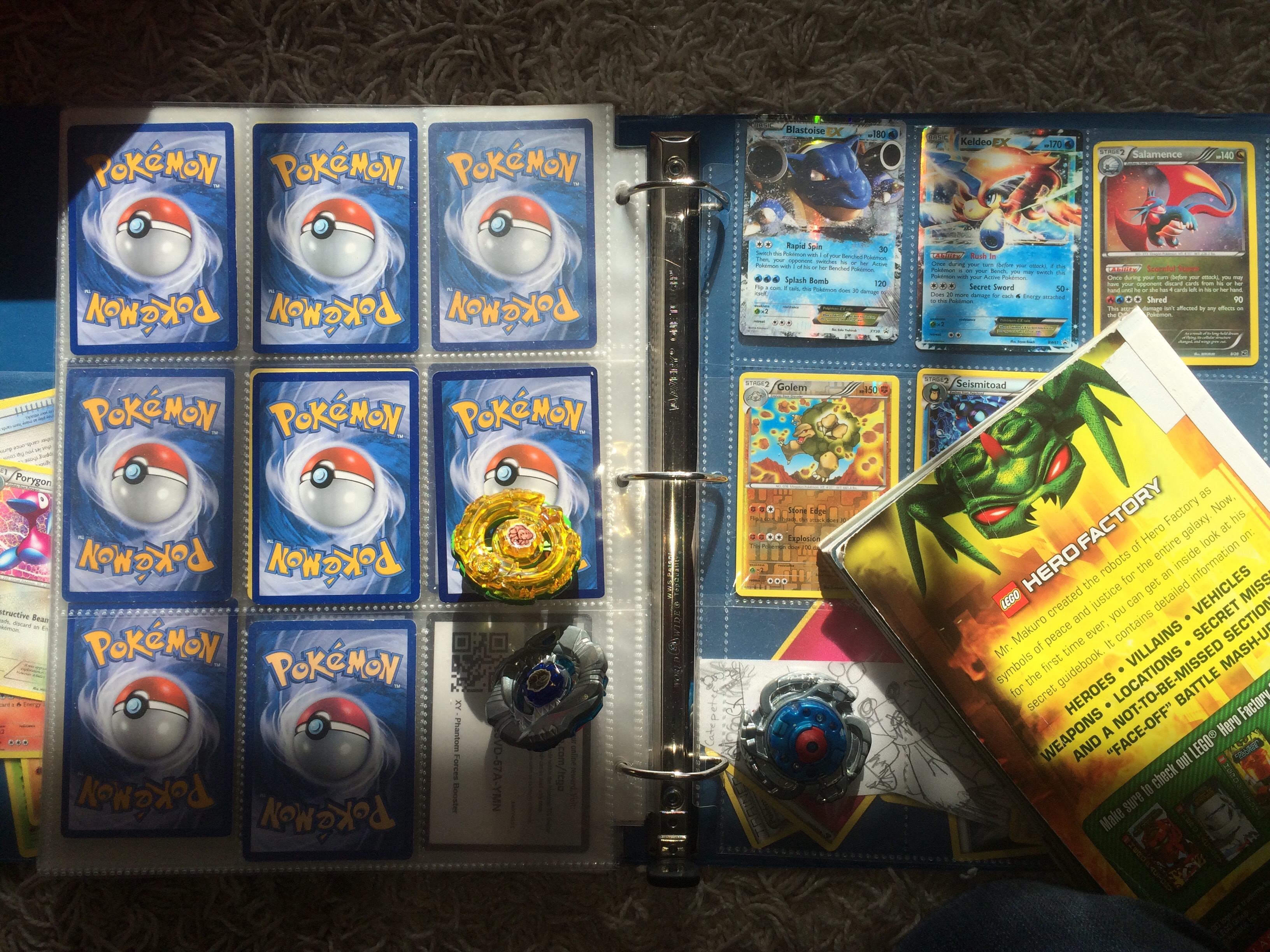
The games and toys that my two boys play with most often all have one thing in common. They all involve a huge cast of characters who must do battle in one form or another. Whether in video games like Skylanders or Super Smash Brothers, or as tangible action figures from Lego’s Hero Factory, or as spinning tops called Bey Blades or in their huge binders full of Pokémon cards, my children know each and every one of these competitors and how they perform in competition.

Do you by any chance know who Pop Fizz, Ninjini and Eye-Brawl are? How about Preston Stormer, Ogrum or Von Nebula? Charizard, Pidgeot or Gangar? I kind of know who they are, but my eight-year-old and my five-year-old could tell you exactly how they attack, who they attack, how much health and stamina they have and what are their main weaknesses. And there are hundreds more that they can describe in such detail. When they give me lists for Christmas or their birthdays, it becomes a long string of gibberish to my ears as they rattle off the characters they still need. I nod as if I understand. A lot. The once-in-a-blue-moon occasion that I remember some of these details leads them to believe I really am paying attention. Sometimes, sort of.

I didn’t play these games as a girl. I tried to decide if that was because I was a girl. I had traditionally feminine, gendered toys I loved: baby dolls, dress up clothes and a pretend kitchen. But I also had many that were not specifically “just” for girls: balls, bats, musical instruments, puppets, paints, roller skates, bikes, a microscope and even Pipeworks (a set of PVC pipes you joined together to make forts). I look at the playtime choices I made among the choices that were given, and I see that I practically never, ever chose something competitive. There was almost never a winner or a loser, no one was ever glorious in victory or saddened by defeat. That wasn’t a part of my play, or of my imaginative world. I anticipated my baby doll’s needs, I squished play-doh, I made up dance recitals in the living room and pretended to be trapped on a desert island in a version of Survivorman meets playing house. I looked at leaves pressed between slides. I made up restaurant menus. Fighting, battling and competition weren’t there.

Why weren’t they?

Competition, and the desire to win at all costs, was considered a scourge as I grew up. Perhaps it was reactionary to the 80’s corporate culture, and a byproduct of the 90’s focus on diversity and inclusiveness. Maybe I had the message reinforced for me in church and school and home that caretaking, cooperation and empathy were far more valuable traits to cultivate. And maybe those traits were emphasized more strongly because I was a girl. And maybe, because I definitely wanted to be seen as a girl, I took to it. Or maybe those qualities were what I was naturally good at, anyways.

I look with curiosity at my children’s obsession with competition games. I am trying to parse out whether there is a problem with this play, because it looks so different with my own. The bottom line: I don’t think there is.

There are gendered expectations put on boys that they will have to engage in competitive activities. There are biologists who are fairly certain that competitive activities go hand in hand with testosterone. There are plenty of men and women I know who (gasp!) actually enjoy competition through sports and games and career-building. While I’m sure I could cite many examples of competitive spirit that went far, far over the line, I believe that the problem arises when it is taken to an extreme.

So, my boys are gearing up to be competitive creatures and to enjoy it. What lessons about competition are my kids taking away from Pokémon cards, specifically?

They are exposed to the idea that every competitor has unique skill sets. No one character is identical or has identical attacks. The diversity of successful competitors, from the cute and cuddly Pikachu to the enormous Mammalswine, gives credence to the idea that there is not just one successful archetype. Success, even in a narrowly defined arena, can look very different.

They are also familiar with the concept that every player has specific weaknesses. These weaknesses may cause them to take on more damage in a fight, if they are attacked in their vulnerabilities. However, everyone has a weakness. There is incentive to carefully choose whether to exploit that weakness for personal gain or not. The boys know that they could be exploited themselves. They know, too, that their weakness is normal and not necessarily of harbinger of defeat.

They watch DVDs of Pokémon exploits where battles are ethically constrained. The Pokémon practice their skills to improve. The trainers must acknowledge the feelings, health and well-being of their fighting Pokémon. The Pokémon themselves enjoy pushing themselves to learn a new move, but know when to rest. Wins and losses are accepted with grace.

And this is similar in all these competitive games they play: the diversity of skills and weaknesses, the need to rest and recover between matches, the impulse to improve, the good sportsmanship of winning or losing with integrity. In a world where (hopefully) healthy competition will strongly shape the lives of my two boys, I am happy they have found fun ways to learn how to navigate that world

Poultry

poultry

My youngest child has always had a fondness for birds, though as I try to trace it back I can’t quite describe when it began.

When I was pregnant with his older brother, I dreamt that my little baby was a songbird. I don’t know that I ever shared that story with the boys.

His older brother’s favorite stuffed animal since birth was a large penguin named Narnie.

I sing the song “Little Bird” from The Man of La Mancha every night as I tuck them in. It begins, “Little bird, little bird, in the cinnamon tree…little bird, little bird, please take pity on me…”

When my youngest turned four I began calling him my duckling. His soft light hair reminded me so much of a baby bird’s pin feathers.

We have a bird feeder, though quite often we forget to fill it. Near our house we have seen red-winged blackbirds and Canadian geese, robins and cardinals, finches and seagulls, herons and red-tailed hawks.

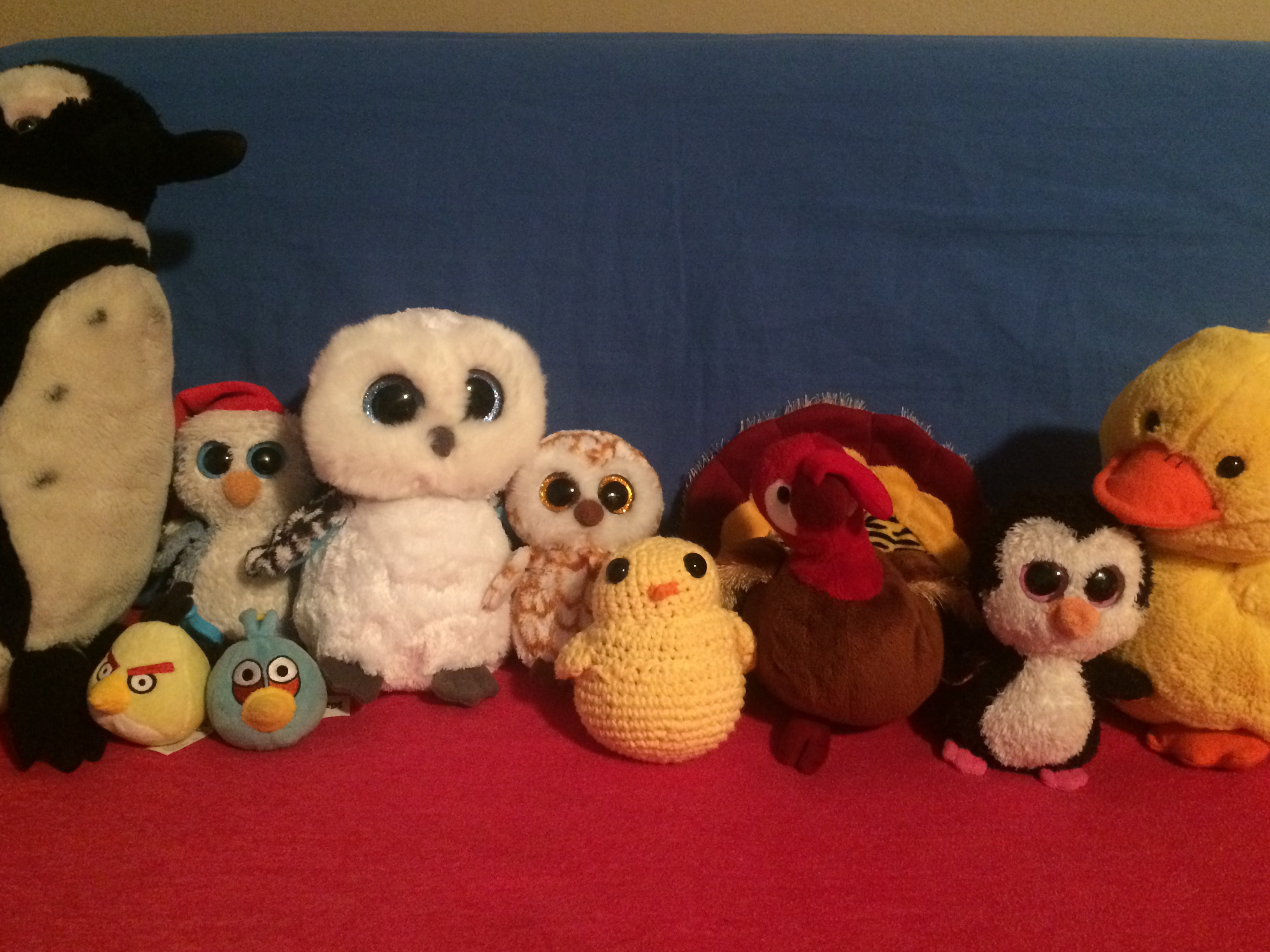
My youngest has a collection, now, of stuffed animals that are birds. There are a mama and baby owl set named Snowy and Syrup. There are huge ducklings, smallish penguins, a chick and even a wild turkey. The birds nearly always keep the coveted stuffed animal spot on the bed, and rarely see the inside of the toy chest.

I suppose it was just a natural progression of his fondness that two weeks before Thanksgiving he suddenly found it unbearable to think of chickens and turkeys being eaten. I admit that all the billboards and television cooking shows made his sadness thicker. Everywhere there were raw birds, golden birds, chefs advising ways to tuck back wings and tie up legs. The carcass of a bird was identifiable as the body of something missing a head and stripped nude. He cried, quite often.

For those two weeks, and a few weeks after, he would not touch chicken or turkey, though both had made up half of his dinners before. We shielded him from seeing our Thanksgiving turkey as much as we could, and at the long dinner table that night he got to sit next to his uncle who is vegan, and revel in being with a like-minded soul.

In the midst of it all I wondered aloud with him if one thing that troubled him was the language we use. When we eat beef we don’t say were having “cow”. When we eat pork or bacon or ham we don’t automatically call it “pig”. I asked him if it would help him at least feel less sad if we called chicken and turkey “poultry”. He agreed that it would, that he would not have pictures in his head of a live chicken and a dead chicken at the same time.

As a whole family we’ve had more vegetarian meals lately, and also more beef and pork overall when we do eat meat. When we go to fast food restaurants I ask the boys if they want “Poultry Fingers” or hamburgers or mac and cheese. At home for dinner we still sometimes have “Poultry Vesuvio” or “Poultry Cacciatore” or “Barbeque Poultry Baked Potatoes.”

The word “poultry” seems to soften his stance on not eating “poultry” – since we started using that word he will sometimes choose the fingers or have a bit shredded in a soup. And while it buys me some time to get him acclimated to healthy vegetarian food and makes life a little easier from meal to meal, I feel dirty. I have marketed chicken differently, and so hidden the parts that are so objectionable to my five-year-old, and made it okay for him again. I am wondering how much longer I will hold out using the word “poultry” before I decide to say “chicken” or “turkey” again. When I switch back I have to be prepared that might be the end of my child eating meat and some radical changes are going to be happening around here.

He is developing empathy for other living creatures, and I cannot be mad at that.

The day before Thanksgiving he and his brother made posters about saving endangered species, protecting the food chain, discouraging hunters.

One says, at the top, “Do not hurt animals”.

Another of the posters asked, “Do you promise?”

I promise to try, my duckling.

I promise to remember that birds are your friends.

I promise to be respectful on that day when you finally do tell me you won’t be eating poultry ever again.

Lists

Binders

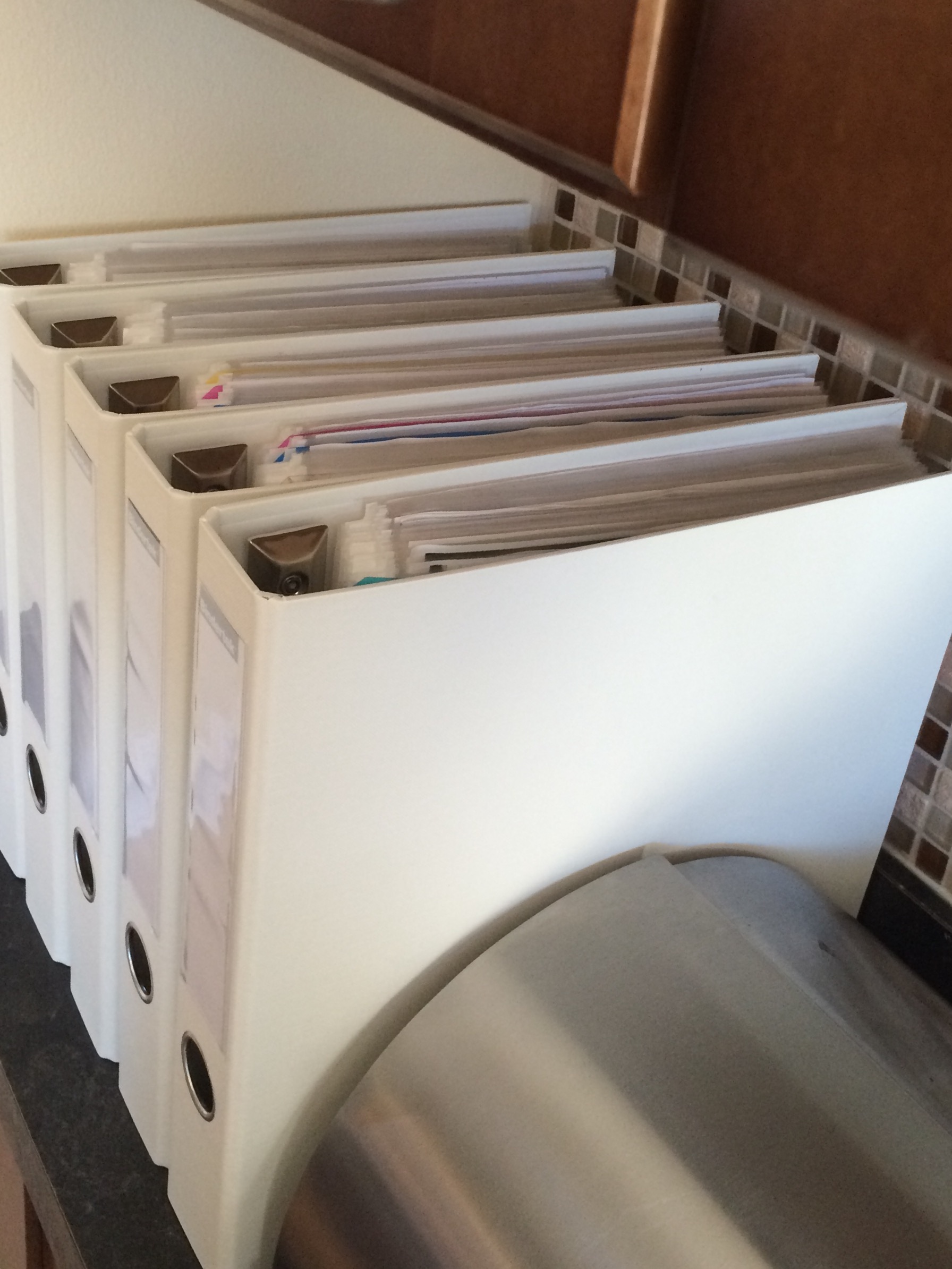
I seemed to have a difficult time making up a Christmas list this year. I had requested a couple of books (Humans of New York and one with close-up snowflake photography by Kenneth Libbrecht and Patricia Rasmussen) and nice white binders for my recipe collection (I know you are jealous! But, seriously, I love them). I remembered that my one pepper mill was broken, and there was a small charm I wanted. But beyond that, I didn’t have a grand wish list, which was beginning to annoy friends and family.

I’ve done a better job, I think, of letting myself get the inexpensive things that either I need or that would make me happy throughout the year. The cheap extra pair of sunglasses I keep in the car or my purse, so if I’m foggy and light sensitive I do not break down sobbing over misplacing the only pair I have. One extra pair of jeans, so that if laundry day is late I’m not faced with only having a dirty or chalk-covered pants to wear. A song I like downloaded on a whim. A treat purchased because I would like a treat. I don’t have the same backlog of needs or wants that I used to, and I hope do not take that for granted. I am very lucky.

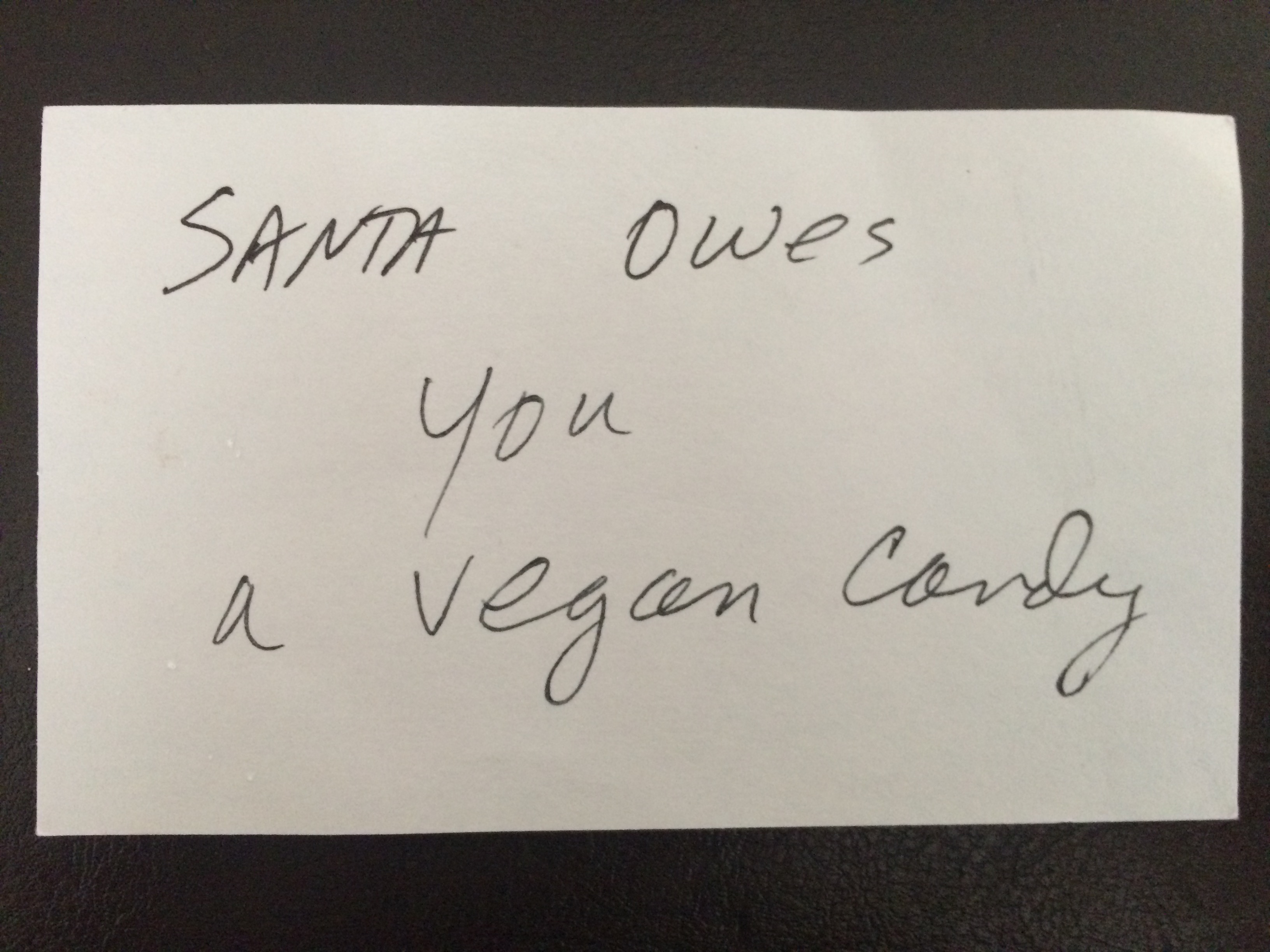
The other issue is, really, that most things I want cannot be bought or given. I really am not trying to be coy or philosophical here, expounding on the important things money can’t buy. In totally literal terms, I want dairy-free candy. Dairy-free candy is really hard to come by.

This note was even in my stocking at my parents’ house:

santa

I assured Santa that the IOU was totally not necessary, and on my end I took the time to make a ton of dairy-free Christmas cookies.

But the other things I want, no one else can get for me. If I want to feel reasonably healthy, I am the one who needs to exercise and go to bed on time. If I want to feel sane and calm I am the one who has to reflect and journal and type and prioritize and set boundaries. I get enormous amounts of love and support from my husband and kids and family to make those goals a reality, but they cannot do those things for me. So as Christmas approached my resolution list grew much faster than my gift list. Here are a few:

My Resolutions for 2015

  1. Remember that an hour spent away from the kids to exercise is better than being mentally and physically checked out for a whole day.
  2. Try not to talk about my physical symptoms so much in front of the kids. My oldest now tells us about every tiny paper cut, abrasion or hangnail he has all day long. I suspect that he sees griping about aches and pains as a way Mommy gets attention, and is replicating it. I don’t want that to be my only narrative, and I don’t want him to become a hypochondriac.
  3. Be ready to take a good hard look at why the house is constantly messy. Be ready for some hard realizations about myself and how I operate, and what I model. When I spent all my time cleaning, before, I was able to have a clean home. I don’t have time for that anymore, and need to look at not making the mess in the first place. I don’t know yet how to do that.
  4. Be brave enough to admit that I do not know how to do my hair or make-up. I probably should have learned at 14, but I didn’t, so here I am twenty-some-odd-years later wanting to figure it out and knowing I’ll endure all those teenage mistakes in front of other moms at drop-off and pick-up. I would like to look more polished on occasion.
  5. Eat less fried food. I like fried food.
  6. Remember to be me.
  7. Eat more vegetables. More vegetables that are not fried. See #5.
  8. Teach my kids about religion. My goal for next Christmas is to not be sitting in a booth at Steak ‘n’ Shake in December with my five-year-old asking, “So, who is Jesus again?” They should know, they should know the religions that shaped the world, they should know why people believe and what they believe.
  9. Watch more movies, listen to more music.
  10. Make and eat pecan pie before 2015 is out. I did not make myself dairy-free pecan pie this Thanksgiving, and I regret it.
  11. Make sure I tell the people I love that I love them more often.

The things I want most have to come from some action on my part, which is exhausting. But it also makes me realize how much power I have to shape my own life, for better or worse all year long.

Spanish – Italian Lessons

Farfalina

“So, Mommy, did you know that farfalina is Spanish for butterfly?”

“Um, what? No, that can’t be right.”

I have a horrible know-it-all habit. Whenever my kids tell me something new they’ve learned that isn’t totally accurate I feel compelled to say, “Actually…” and then I correct them.

“Actually, mariposa is Spanish for butterfly. I thought I remembered that from high school Spanish. I mean, give me a second and let me look it up but, no, yeah, no, farfalina is Italian.”

I am not sure why I have to be right all…the…time…

“Yeah, kiddo, I’m looking at my phone now. Farfalina is like the word farfalle, you know, the bow-tie pasta that looks like butterflies? Who told you it was Spanish?”

“Our neighbor.”

“But she’s Italian! She learns Italian words all the time. Why would she say it was Spanish? Spanish and Italian are both based in Latin and they are similar languages, but in this case they are different. I even had a student named Mariposa in Texas, who was Mexican-American and I had asked her about her name.”

My eight-year-old tried to defend her by saying, “Well, maybe I remembered it wrong.”

I finally stop talking and let him wander off to brush his teeth. In the quiet I realize something.

“Well, maybe I remembered it wrong.”

That’s what it is.

That is why I keep badgering him, why I can’t stop being right. That’s what I am afraid of, not that he remembered something wrong, but that I have started to remember things wrong.

A few years ago I had an MRI of my brain. We were looking for dark spots that might indicate a tumor, or perhaps Multiple Sclerosis. I had been losing words mid-speech, writing sentences that didn’t make sense and assuming I had read something correctly when I hadn’t. I felt drunk when I hadn’t had a drop. I tasted salt when there was none. I nearly scalded the boys because when I tested their bath water I couldn’t feel how scorching hot it was. I could no longer assume that any part of my brain was allowing me to process or understand the world correctly.

We didn’t find anything wrong.

I was later diagnosed with fibromyalgia, which mostly means that the doctors don’t quite know what is going on. Without understanding the mechanisms of it, many of us get a sensation called “fibro fog” which pulls a mist around our minds and makes it hard to function. I don’t get this sensation as often as I used to, though for a while it was such a part of daily life that I felt I might have Alzheimer’s. It only happens once in a while now, but when you can’t read to your kindergartener without transposing a bunch of words, it is still quite disconcerting.

With regards to my cognitive function, everything I’ve learned (or thought I learned) since I first started having symptoms is suspect. I often think I’ve filed new information in the correct part of my brain only to realize later on that I haven’t. When I find I might be wrong, I scramble like mad to check my facts by searching my memory and the internet. I do detective work to reassure myself that I didn’t screw it up.

So going on and on about the many ways I was absolutely certain that mariposa was the Spanish word for butterfly and farfalina was Italian felt necessary. It felt good to be able to track so many neural pathways that brought me to the same conclusion – I was right. It felt so good to know that I haven’t totally lost my mind, at least not yet.

But…

I know this isn’t a good thing to be doing to my kids, whatever reason I might have for doing so. And now the boys do the same thing to me. I’ll make a comment about how pretty the full moon is and I get…

Actually, it isn’t full yet. It won’t be for another day.”

Or I’ll compliment one of them on a drawing I assume is just a bird and get…

Actually, this is a Peregrine Falcon. Couldn’t you tell by the talons and how he’s swooping down with lines behind him like he’s really fast?”

It drives me crazy! I can’t say anything without being corrected for being inaccurate. My know-it-all karma has given me back know-it-all kids. Fibromyalgia or no fibromyalgia I have got to slow down this impulse to inform and correct before it gets even more out of hand.

But, actually, did you know that the Spanish word for fibromyalgia is just fibromialgia? And that the Italian is exactly the same? And that a lilac-colored farfalina is its symbol?

Maybe I can’t be stopped.

Sick Days

medicine

The weather changed. The air got colder, rain fell for days. Each night this week a little hand would reach out in the dark to find me. My little guys would discover that I was still there sleeping right next to them, and feel comforted enough to know that they could try to fall asleep. I would know, as soon as they did, if their barking cough turned frightening; they wouldn’t have to try to call for me with no breath left.

We kept the window open a crack, a towel sitting right up against the threshold to catch rainwater before it flooded the inside of the house as it had flooded the street. The cool damp air helped us all breathe better.

It was just the three of us for days. Both boys missed a whole week of school. My husband had gotten on a plane for work on Monday. Between the rain and our colds we stayed home doing just the minimum to get by. Watching movies. Taking medicine. Eating food. Sleeping. Cuddling. It was as if we had stepped back in time, when I was a stay-at-home mom with two small children too small for school.

For this one week we didn’t rush anything, not waking or dressing or eating or thinking or deciding or cleaning or bathing or bedtime kisses. When homework and playdates and PTA folders disappeared, other things reappeared. Well-loved toys that had languished in the back of cabinets now spilled out all over the living room floor, useful again. Movies that we had outgrown, at the oh-so-mature ages of five and seven and thirty-five, got new viewings-with popcorn when our scratchy throats could manage it. I got to go back in time, to when coloring with my child was part of my job description, and napping with them was an important part of our daily routine.

When they were so small and helpless before, the isolation of these sorts of days had felt stifling and dangerous. The responsibility for their health and safety weighed so heavily on my every move, and the length of the hours taxed my soul.

Now that these days are a pause from normal life, rather than normal life itself, I am able to see the gifts those long sequestered days had given them and given me.

I know them better than I know almost anyone else on earth.

We had time together to just be, before clocks and schedules ruled our days.

They know that they only need to reach their hands out a little ways for help, and I’ll be there.

What is fair?

red

My oldest is complaining again, “It isn’t fair!”

Okay, I’ll bite. I ask back, “What isn’t fair?”

“You tell me ‘no’ all the time.”

“Well, of course you get told ‘no’ all the time. You ask for hundreds of things every week. If I said ‘yes’ to everything you ask for nothing else, literally nothing, would get done.”

“You never say yes.”

“Wait a minute-did we go bowling two weeks ago? Did we go fishing this week? Did we read the book you wanted to read? Did we put the Lego set together? Did we play poker? How did we do all those things, things that you wanted to do, if I never tell you ‘yes’?”

“But you never say ‘no’ to my brother.”

“That’s because he barely ever asks for ANYTHING! I say ‘yes’ to about three requests from each of you every week. Just because he only asks for three things a week and you ask for a hundred does not mean I am unfair. The percentage of time that I tell you ‘no’ is higher, but the actual number of times I say yes is exactly the same.”

His face softens and he tells me, “I guess…I guess I just feel disappointed.” His shoulders slump. I would have never argued with his younger brother this way, and I’m ashamed that I debated him until he had to admit that I was right and he was wrong. Whatever equations I’ve created in my mind to prove how fair I really am-how we spend equal measures of time, energy or money on each kid-I was totally unfair in how I responded to him. He is only seven, after all, and if he were his five-year-old brother I would have asked him gently why he felt the way he did. I wouldn’t have tried to crush him with statistics, ignoring his feelings.

But, I tell myself, they are different creatures. My oldest is the squeaky wheel, persistent about expressing his needs and not afraid to be argumentative when he is shut down. Eventually he can be persuaded by logic and resigns himself to reality. My youngest is silent about his thoughts and needs most of the time. When he finally does express himself it is a loud tantrum that he refuses to explain unless you gently, subtly try to coax a reason out of him. At least, that is how they normally operate.

I was talking to the boys the other day about how beautiful our trees have become this fall. We talked about the purple-red edged giants, the flaming orange stunners. The year before, when I drove my youngest to preschool, there was a whole street on our route that was lined with a particular type of tree. These trees had yellow-golden, tiny, tiny leaves that shook down like confetti. I asked if he remembered them. I then started going on and on about how red some bushes were by my oldest kid’s elementary school, and how they were so vivid I had to take a picture of them.

My youngest sighed then, and I asked him gently what led to that sigh. He looked resigned and sad and his brother and I were quiet enough that he actually spoke up.

“You must have liked the red leaves better.”

What?

“No, sweetie, of course not. I like all of them. Why would you think I like them better?”

“Well, you never took a picture of my trees. They must not have been good enough.”

Here was my youngest, quietly speaking up for himself, quietly presenting me with evidence I couldn’t argue with (though if it had been my oldest, I surely would have tried). Me taking the time to record one tree, and not record the other, was the same as valuing the experiences I shared with his brother more than the experiences I shared with him. This was a way of being unfair I had never thought about, never accounted for, though it instantly made sense. Sharing the things we love, making sure we don’t forget them, making and preserving those memories together is very important.

I stalked those trees for weeks, working to get a picture of them fully golden with their glittering leaves shaking down. I wanted to make it right.

I apologized to my oldest for arguing with him so much.

I am trying, very hard, to be fair.

golden trees