The Pain of Not Being Able to Communicate

donut

This is the second installment of my column Pain and Joy.  I plan to continue on with it the first Wednesday of each month, so wish me luck!

Christopher, Nicholas and I sat on the couch, their pointy elbows pressed into my ribs, and their pointy chins digging into each of my shoulders as they tried to crowd in to get a better look.

“How come Christopher is always so cute in pictures, and I’m not?” Nicholas wanted to know.

“Kiddo, this album is from 2011, and you would have been four – that cute kid is you.”

Nicholas looks sheepish and pleased with this realization, but also surprised, “I was so little!”

“Hmmm, yeah guys, this is Christopher,” I point at a picture of a toddler with impossibly chubby cheeks sitting in a red plastic wagon, “He would have been one and a half here.”

Christopher, so mature and lanky at six years old, lets out a squeal over how cute he was, while I notice a pattern to our pictures. “Hey, what’s up with you, here? In every other picture you are completely crabby!” Actually, in three out of four pictures he looks either completely unimpressed with life or, as Thomas the Tank Engine might say, quite cross.

Giggling hard he gasps, “Why was I so angry?”

“I know, right?” I goof with him, flipping pages rapidly, “Cranky, cranky, cranky, happy! Cranky, cranky, cranky…”

When Christopher laughs now his cheeks still get round and full. He’s now laughing so hard that he is slightly out of breath and…

“Happy!”

He lets out a long sigh and wipes his eyes.

I didn’t realize how much of his unhappiness from that age would have come through in those pictures. I do know why he was angry, or rather I can guess. Long past when he should have started, Christopher either couldn’t, or perhaps wouldn’t, talk.

Christopher was, and is, wonderfully adept at reading people’s faces, at discerning the tone of their voices and at understanding the nuances of gestures. As a toddler he could express himself non-verbally almost perfectly. His body language transmitted his mood exactly, and he brought his whole body into sadness or frustration or manipulative charm. He knew to direct your eyes to where he wanted you to look by staring you full in the face, and then directing his gaze at what he wanted. His sighs and squeals and yells were unmistakably clear, but that was it. He didn’t babble. He only had one word by the time he was two.

I knew he was angry that he couldn’t get us to understand what he meant or what he wanted, or more importantly, needed. We would begin a ridiculous guessing game. It was a lightening round of 20 questions, where I would survey the situation, scan my memory for what he would be most likely interested in, and ask a yes or no question. I hoped like hell that I asked the right one before his frustration detonated. If he shook his head “no” too many times steam would practically pour out of his head before he began stomping his feet, and I would frantically try to get it right before he would collapse in a sobbing heap on the floor in utter hopelessness. Or his tantrum would be quieter, with him simply stopping in his tracks, refusing to look up and refusing to walk forward another step.

Christopher began speech therapy after he turned two.

The Halloween he turned two and a half, I had been wondering out loud what his costume should be. I had grown accustomed to making these decisions for him, as he rode quietly in the seat of the shopping cart. I picked up a little faux leather jacket and muttered to myself that he could be a rock star. Christopher paused in what he was thinking about to focus his eyes on me and said very, very clearly, “Dog.”

I was stunned. This was the first time, the absolute first time, he was able to calmly express that my ideas for him were not the ideas he had for himself. Just one word, one syllable; the access to that one word gave him power. That one word gave him the ability to feel secure in his message, to feel secure enough in his ability to be understood that he didn’t have to scream. He didn’t have to cry. I didn’t have to guess, and guess wrong. I blubbered, “Of course you can be a dog! Of course you can be a dog.” He smiled, a very quiet serene smile.

Christopher turned three in April, and the volume of the words he could use had exploded. At his meeting with the school district, the evaluator said that he was no longer delayed, but he could continue with the program for pronunciation help and emotional support. His tantrums were no longer something that dominated our days, though he still didn’t have quite enough words to communicate everything that went through his mind, so they did still happen now and then.

In May, I brought the boys over to my parents’ house to visit and tell my mother that they loved her, now that both of them could. I dropped them off at my in-laws to stay the night, as my father and brothers and I would be helping Mom through open heart surgery the next morning.

When Mom’s surgery was successful, and after she had been in the recovery room for the initial few hours, we were allowed to see her, two at a time, in the ICU. I don’t remember who went first. I know Dad was one of the first two, and then maybe one of my brothers Scott or Matt or Anthony. She was not awake the first time I saw her. The second time I came in I know Matt told me, “She seems happy when you hold her hand.”

So I did, and as I held her left hand I thought about what she might be feeling. Her face was flushed and scrunched and looked distressed. I wondered if she felt anxious about the breathing tube still being in place. I wondered if she was feeling pain from the incision, or if she felt worried about her Parkinson’s meds being off, or if there was a part of her that felt scared or lonely. Then she tried to wriggle her fingers out of my hand. At first I held tighter. She seemed to be trying to break free of my grip, and I chastised myself that perhaps I had been patronizing and she didn’t need my hand.

Confused, I then tried to release my hand, and Mom, with limited motion because of all the equipment attached to her, waved it back and spread it open. She traced something on the palm of my hand, and I looked up at her face with surprise, “Are you trying to write something?”

She blinked her light green eyes so deliberately I knew she was nodding yes.

“H…” I would look down at my hand to make sure that the letter I felt was what the letter actually looked like. I had so many years of practice when she would trace the alphabet on my tiny back and I would proudly tell her that I knew what she was writing. As I said each letter I looked up at her face to confirm I had gotten the letter right.

“O…T. Hot?” I looked up at her and with a softening of the tension in her face she indicated yes. Just one word, one syllable and her power came back. I wrenched myself away from the soft fuzzy imaginings of what she might be feeling, and was able to focus on the practical things that needed doing. My ideas about her were not the ideas she had herself. I played twenty questions with mom, “You feel too hot? It’s really uncomfortable?” Then I would ask the nurse, “Can we remove that blanket? Is this normal to feel so hot?”

By then I know Anthony was in the room with me, and I would call out letters to him so he could help me string them together coherently.

“T…A…P…E”

“The tape is bothering you? The nurse says we have to keep that on, its holding the breathing tube in place, I’m sorry.”

“I…P…O…D”

“Oh yeah, the soothing meditation sounds for afterwards. We’ll get that set up right now.”

“C…A… wait I missed that one, you have to slow down a little because I can’t keep up…H…B? Okay Mom, the nurses need to you to relax for a little while to get deep breaths to get your oxygen levels up.”

When Mom breathed deeply enough, she would fall asleep and her oxygen levels would drop, which meant waking her up again. I explained the situation to her and she wrote in my hand one more time before I was shooed away. I was so tired I couldn’t catch it. “Tell me later, Mom. You can tell me later.”

Later on she told me with a smile, “I’m surprised you didn’t get that one. I was writing ‘Catch 22’ joking about what the nurses wanted me to do with the breathing.” I smiled back at her and apologized for missing it.

The same way I had apologized so often to Christopher, “I’m so sorry I didn’t understand you.”

Pain and Joy

willis tower

This essay was intended as the beginning of a monthly column, a pitch for a well-regarded online literary journal.  As I mapped that series out, I decided that these were ideas I wanted to write about regardless of whether they were accepted and published elsewhere.  They weren’t picked up, which is disappointing, but I’ve decided that the first Wednesday of each month will be when I continue the column for myself.  That’s my intention, at any rate, and we will see how that goes.  Thanks!  

My two sons, Nicholas and Christopher, are eight and six respectively. My chronic illness began when Christopher was just a year old, so by all accounts they have known a mother with pain far longer than they have known her without.

The first blood tests were drawn out of my fat, left-arm vein when Christopher was still small enough to fall asleep in his car seat and was portable like a piece of awkward and heavy luggage. Nicholas was squirmy and independent at three, and I couldn’t trust him to not run through the parking lot if I let go of his hand. Christopher swung from my left arm and Nicholas from my right, and I shouldn’t have gotten the three of us from the doctor’s office to our car that way. I bruised an ugly purple in the crook of my left arm later that night.

That was the beginning. Tests for diabetes and allergies and rheumatoid arthritis followed, as well as screenings for ovarian and colon cancer, and an MRI to look for multiple sclerosis. I was eventually diagnosed with fibromyalgia: a disease of exclusion. The answer to my near-constant pain and overwhelming exhaustion was a non-answer because fibromyalgia has no known cause and no cure. The term “fibromyalgia” might really be an umbrella over several linked but separate illnesses, or it might have its own pathology that hasn’t been discovered yet.

For at least five years I fought every day to mitigate the pain I felt and the pain I thought I might be causing them by being a mother who sometimes couldn’t. I fought to minimize our pain as a family and that became my full-time job. I was a stay-at-home mother for both Nicholas and Christopher their wholes lives, but my real work was to track down the root cause of why any of us were hurting.

I have become very, very good at spotting pain from a distance of space or time. I can hear Christopher’s tone of voice change across an entire playground if he is starting to get so agitated that he might hit a friend, and I know that once we have missed three nights of bedtime stories in a row Nicholas’s shoulders will round and slump in defeat and loneliness. I am honed in on pain, and aggravation, frustration and tears and the fleeting expressions that betray those emotions. This was something I could do, I could see pain as clearly as I could see the color of someone’s hair. This was a way I could still help, even from the couch. I had information about how to mitigate pain in many different forms, from migraines and cramping muscle spasms to loneliness and perfectionism. What I didn’t yet know, I found out. What I did wrong, I corrected. What I knew, I shared as often as I could. I found a way to contribute.

Over time, one of my symptoms became more severe. It wasn’t so odd that suddenly my limbs felt like they were filled with sand, but it was odd that it was happening so often. A feeling would come over me that I could not keep my body upright and that I had to lay down immediately. When I realized it was often after I ate, I researched that combination. Reactive hypoglycemia seemed to be the reason why: after eating too much or too much of the wrong foods my blood sugar would spike too high, prompting my pancreas to produce too much insulin which would make my blood sugar sink too far down. Since I have done stranger things than eating small regular meals and avoiding sweets, I decided to try a hypoglycemic diet.

More good days than bad, was how I had been describing my fibromyalgia. But the good days still included wild fluctuations of anxiety and depression. The good days still might mean that I fell asleep on the couch for an hour when I didn’t even realize I was tired at all. The good days meant that I didn’t growl all through soccer practice, but I might growl a lot when the boys took too long in the bathtub afterwards. Then a bad day included a Mother’s Day where Nicholas asked me over and over again what special thing I wanted to do and eventually I hissed at him, “I don’t feel well. I don’t know if I’ll still feel this bad all week and I cannot afford to feel bad all week. It’s my Mother’s Day, what I want is to clean up the kitchen, to put the laundry away, to take care of chores now. I want to know that we’ll be fine for the rest of the week. That is what I want. Is that all right with you?” Something had to change.

I changed my diet, and I felt good. Actually good. It lasted longer and longer. I felt better and better. My good days now included spontaneously taking the boys to the pool and not experiencing the gnawing fear that I wouldn’t have enough energy to now make it through the day. My good days meant fourteen hundred words of writing in one morning, when fourteen hundred would have been a stretch for an entire week. My good days meant I could tickle Christopher and wrestle with him and not hide the tears that would have normally stung my eyes seconds before I would have had to tell him, “I’m so sorry, but I can’t anymore. I’m hurting too much.”

I had lived so long mitigating pain and had become so adept at devising strategies to cope, it was the skill I had honed the most. It was a skill and a body of knowledge I shared with my family and shared with friends and shared with strangers. It became a constant in my life: seeing and helping to ease pain. That was primarily what I did, all day long.

All that time I was a student of pain I wasn’t necessarily a student of joy. I felt fairly certain that joy was, for me, obtainable only in small measures, and I felt content looking for it in small places. On a daily basis joy meant, simply, less pain. If I could achieve that for myself or anyone else I was happy that the limited amount I could do, I did. Now I have passed that limit. I feel much, much, much better. A part of me feels guilty that I do. A part of me wants to learn joy.

I want to share with you what I have discovered about pain. I don’t want the five years I spent in pain, the majority of my children’s lives, the primary hard work I did during that time to become lost. There are times and situations where less pain is the only joy you can reach for today.

And I want to share what I am learning about joy. Because I want to share joy.

Night Light

My audio recording of Night Light

Dusk

Darkness, the way night makes the edges of things indistinct and brownish-grey, is something I experience most often within the walls of my own home. Children who need to go to sleep by 8:30 and a husband who travels nearly every week mean that night is something that descends gently outside our windows. It does not fall on us while we are sitting on a terrace, enjoying the end of a restaurant meal. It does not surround us as we walk down city streets, or hike through woods. Even in the winter, when the sun dips below the hedge-line of our backyard before dinner, cold keeps us in and cozy. Night does not often fall on us somewhere other than our house.

Which is what makes memories of bonfires on freshwater lake beaches stand out as unique, both as a child and as an adult.

I remember being only six or seven when I was encouraged to try roasting my first marshmallow over a bonfire. The small circle of light cast over the grassy sand only reached the feet of the adults who were watching us. They sat back in lawn chairs, their faces obscured by shadows unless they leaned forward to peer at us more closely. I kept darting carefully between the fire and the adults in that circle of sand, amazed that I was holding a stick over fire without grown-up hands holding on as well. My legs were still bare in shorts, but a sweatshirt helped keep the chill off when I would venture further away from the glowing heat.   I asked again and again if the marshmallow was cooked enough because I wanted to do a good job of it, until one patient grown-up who became tired of leaning forward so often to see a still bright-white confection explained that when it was “golden brown” it would be done. I remember nodding my head not really sure what color that was. As I left it in a little longer, and a little closer to actual flames, I got to see it for myself and understood.

With the adults’ faces hidden and their voices hushed I got the first sense that, while they were there if something happened, I was alone to think and discover and learn without them. The glow of this small space in such a large darkness was enough. Even with an entire universe unknown, there was safety being alone in it as long as some light remained.

A few years ago we went to a family reunion on Kentucky Lake, and one of the nights we had a bonfire on the beach.

My older son was only six at the time, and afraid of many things. I saw him come close to the fire, then retreat with his father just feet away from the light. They were swallowed by darkness quickly, and I could hear their voices trip down to the water’s edge and come back. In that short trip, with my son only reassured by my husband’s hand holding his, he accomplished something big I didn’t know he could. He walked through unknown places without fear; he even felt a frog jump onto his foot and didn’t panic. In fact, he was excited to report what adventure had happened in his short absence from my sight.

I stayed in the sand with the littler ones, including my younger son who was four. We stayed a little ways off from the fire, but made our own circle of light with glowsticks. Preschoolers, with parents just out of the cast of pinks and greens and oranges and blues, sat with me and buried their glowsticks in the sand. They retrieved them and would bury them again, checking how far beneath the surface they could plant their treasures before they were completely obscured. They threw them and chased after them, holding so loosely onto the only light they had. Even in the daylight I couldn’t necessarily figure out who belonged to whom, which children went with which adults. I made sure to lean forward so they could see my face and I could see theirs and then tried to let myself feel safe that other adults were circled around us in the darkness. That they were still watching us even if we couldn’t see them as clearly. No one would really be lost in the darkness for long, even if they danced on the edges of it. Though it looked like I was the only one keeping an eye on the children in the circle of light, I wasn’t.

I knew as a child, and as an adult, that a safe presence can still be there even if it is unseen.

Becoming a Hobbit This Summer

I haven’t posted much for June, and I apologize. Things have shifted and changed around here with the seasons.

Our peonies came and went, huge fluffy pom poms of pink that were delicately soft for being so big.

I swore like a sailor when I found standardized testing “practice” workbooks in the usual end of the year backpack debris field. They were brand new, and I suspect the school wants us to use them. I growled, “I taught, if I believe that you sitting down to do these workbooks is more educational than the other things we plan to do this summer, we will do them. If I don’t, we won’t.” And so far we haven’t.

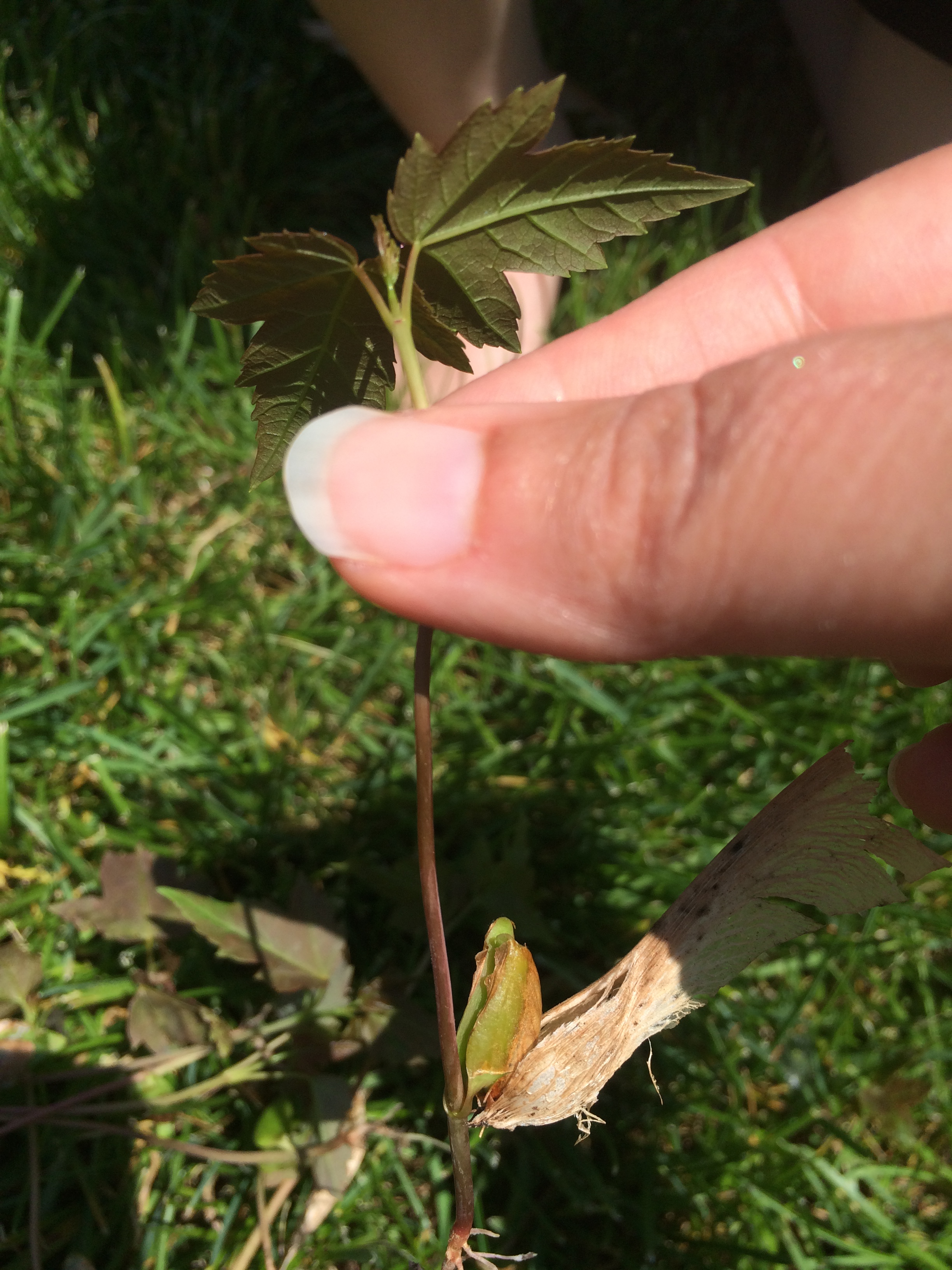
The boys and I have been very busy sitting in the grass, plucking little maple seedlings out of the lawn to see if the helicopter seeds are still attached.

maple

There are thousands of them, confirming my belief that if we all abandoned our houses, this whole neighborhood would be a forest in just a few short years.

We planted a garden and rabbits managed to eat our parsley. However the basil, cucumbers, and a variety of heirloom tomato the boys picked out only for its name “Mr. Stripey” are doing just fine. Oh, and so are the yellow tomatoes we planted named, like a character out of West Side Story, “Lemon Boy”.

Other changes have happened with my health, negative at first, then positive. Near Memorial Day I realized that while I always feel tired, I was falling asleep more and more often right after eating. It would be a swoon, almost a faint, where my body felt like lead and I couldn’t hold myself upright a second longer. It looked more and more like reactive hypoglycemia, a problem my doctor had casually mentioned years ago in passing, and one that fit my patterns of fatigue and anxiety almost exactly. In this condition, if you eat too many sugars or carbs at one sitting without enough protein or fiber, your blood sugar spikes dramatically and too much insulin is sent in to deal with it. Consequently, your blood sugar then drops too low causing jitters, anxiety, extreme fatigue and sometimes a confusion that seemed suspiciously like when I would experience “fibro fog”. I’ve done crazier things for my health, so I didn’t hesitate long to try a hypoglycemic diet designed to keep your blood sugar stable throughout the day. You eat every two to three hours with low carb, high protein, high fruit and vegetable but small meals. No sweets, no caffeine, no alcohol.

paleo casserole

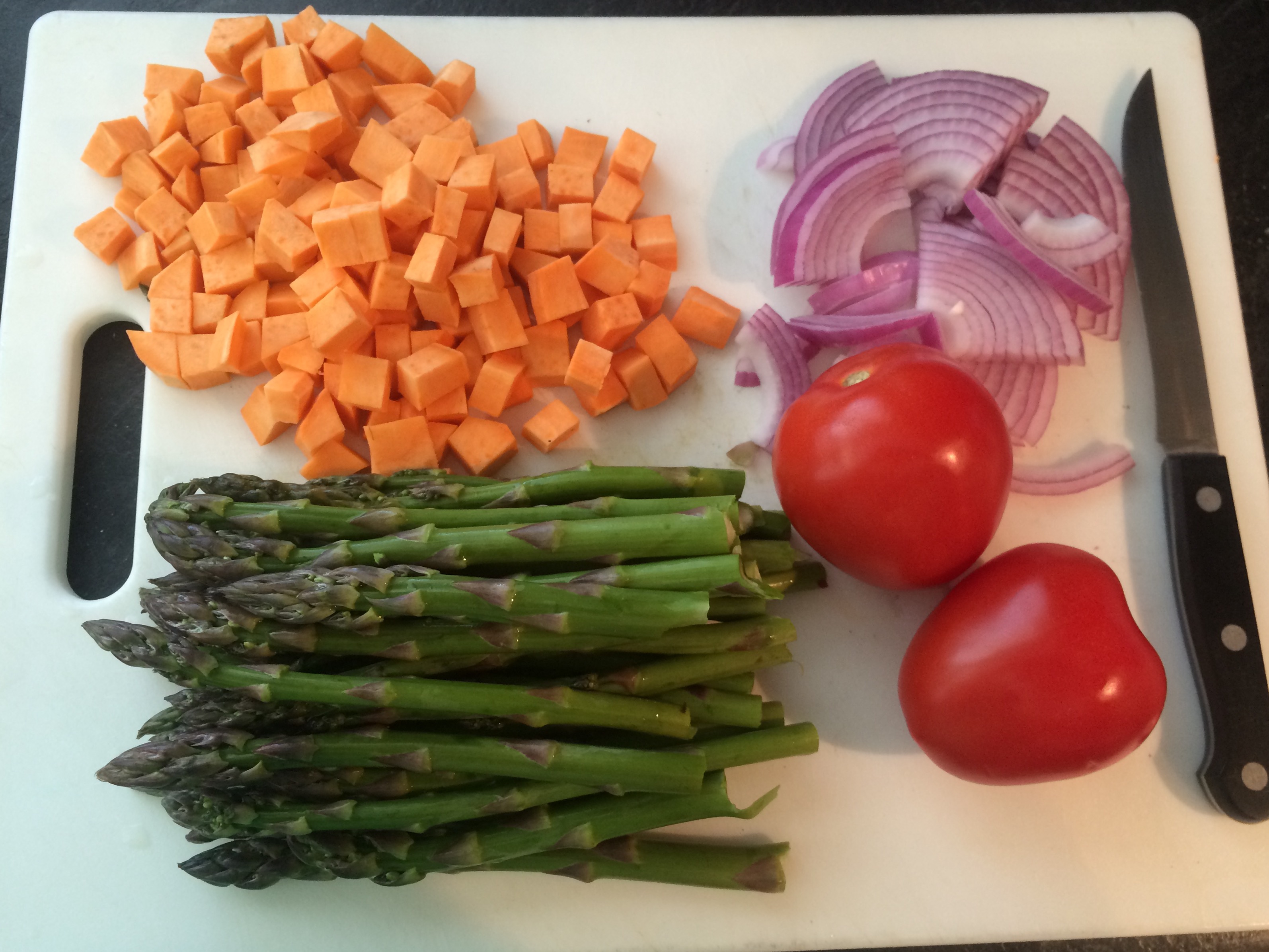
I feel a lot better. When eating perfectly balanced meals seven times a day is less of a hassle than the symptoms you were dealing with before, you know you may have really been sick. When spending a day of the week making a paleo egg breakfast casserole and roasting chicken and assembling salads and taking a short break to snack on hummus and carrots actually seems like it is a bargain for all the energy you’ve gotten back, maybe you really did have a blood sugar problem.

With this change, something else has happened since the seasons have changed that I never thought would. I have been able to take the boys to the pool, and parks, and to tennis courts, and for hikes around our ponds without the fear that it would be too much. That I would get so scared for them that I would limit what they were allowed to do. That I would become an emotional wreck and start yelling at them unnecessarily in public. That I would feel so sick that I would throw up, or need to collapse, or need to rush home. We’ve spent years, and years, doing not a lot because I just couldn’t.

While I tried to focus on all that I could do, that we could do, it wasn’t nearly as much as other families could. If we went to the zoo with you, or a splash park or a playground and I seemed breezy and happy-go-lucky and fine, some part of that was always a benign lie. Getting through that outing was usually a day or so of planning to make sure it went smoothly and weighing whether the time and energy it would require was worth it. The day after was spent in recuperation, getting either my anxiety back in check or my body, all the while having to tell the boys “no” over and over until I felt well enough to handle the process again. If we did make it, know that I had weighed that it was worth it, that the pain I might have gone through to have that experience was one I said “yes” to, and I absolutely meant it. That part was sincere, if it looked like it was a light and casual thing, that part was not.

Suddenly I have the summer as a stay-at-home mom I had always wanted to have with my boys.

willow

I haven’t had to tell them “no” nearly as often. I have been able to say “yes” with just a moment’s notice, or “yes” to multiple outing in the same day. They are going to become spoiled rotten soon. I still have fibromyalgia, and still have unexplained pain. One evening I did have to tell them that I thought the water at the pool would be too cold for me, and that my muscles might cramp. They did, making it very painful to walk back to the car. But, the overwhelming fatigue is mostly gone and in a pain and fatigue disease, that is literally half the battle.

So, I haven’t written in a while because I have been finally busy just enjoying summer. And because I have suddenly become a hobbit, preparing and eating breakfast and second breakfast and elevensies and luncheon and afternoon tea and dinner and supper. I do find myself walking barefoot through the long soft summer grass more than ever before, and I have always been fairly short.

Look, a Peep!

I love artists!

This might be a sort of obvious statement for me, along the lines of, “Oxygen is really wonderful stuff,” or “Since I have to eat every day, I’m really happy someone invented food” But, I do feel like it needs saying every once in a while.

I love all sorts of artists for the color and life they bring to the world, the unexpected juxtapositions of imagery and meaning, the metaphors and the details. The melancholy mood of Billie Holiday’s “Foolish Things”, or the violent wind that seems to shake Van Gogh’s White Roses, or William Butler Yeat’s “rough beast” that brings in a nightmare in “The Second Coming”: all are wonderful and terribly beautiful and full of imaginative life. I am transported by a vision or a feeling that I would have never arrived at without the compulsive need of an artist to create. It is amazing.

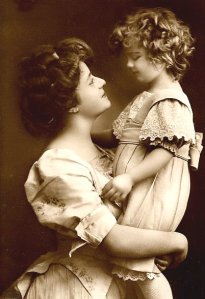
But, I also love artists for entirely selfish and narcissistic reasons. I love when I can see myself, my life, or what is important to me in the art around me. I love that this unknown photographer abandoned stuffy parlor portraits to capture this mother.

Mother and Child

I think that one of my friends finally softened into trusting me after see the same look on my face as the mother in this photograph has. For the first few weeks I knew my friend, she saw only my furrowed brow and heard only my scolding towards my children. Eventually I let my face soften into the same face in the picture, and I could feel her soften, too. Across a century I see myself.

I love that these animators chose to draw George and the Man with the Yellow Hat this way.

George

This comes from a longer episode of Curious George about Halloween. In this still, George has just been told that a frightening legend may have some truth to it. He grabs the Man’s face and stares hard into his eyes.

My oldest child’s birthday is towards the end of October, and whenever we go to the party store to find decorations for his celebrations we are bombarded by macabre costumes and props: knives and skeletons and blood and gore. My youngest could not bring himself to walk through this store, so I always carried him. When a motion detector would trip ghoulish noises, he would grab the sides of my face in his chubby tiny hands and straighten my head so that I could only stare into his eyes. I could not determine if he was trying to protect me from the scary things all around us, or if he needed steady, unwavering reassurance from me. How amazing that that gesture is universal enough that it made its way into this animation.

My youngest son recently got a book for his birthday, a book he loves and which contains a page that describes the protagonist child’s favorite dessert. On a plate, next to an elaborate and beautiful cake, is a small Peep chick. As soon as he caught it he yelped out loud and pointed at it and laughed and laughed. A Peep! Look right there! I love Peeps!

peep

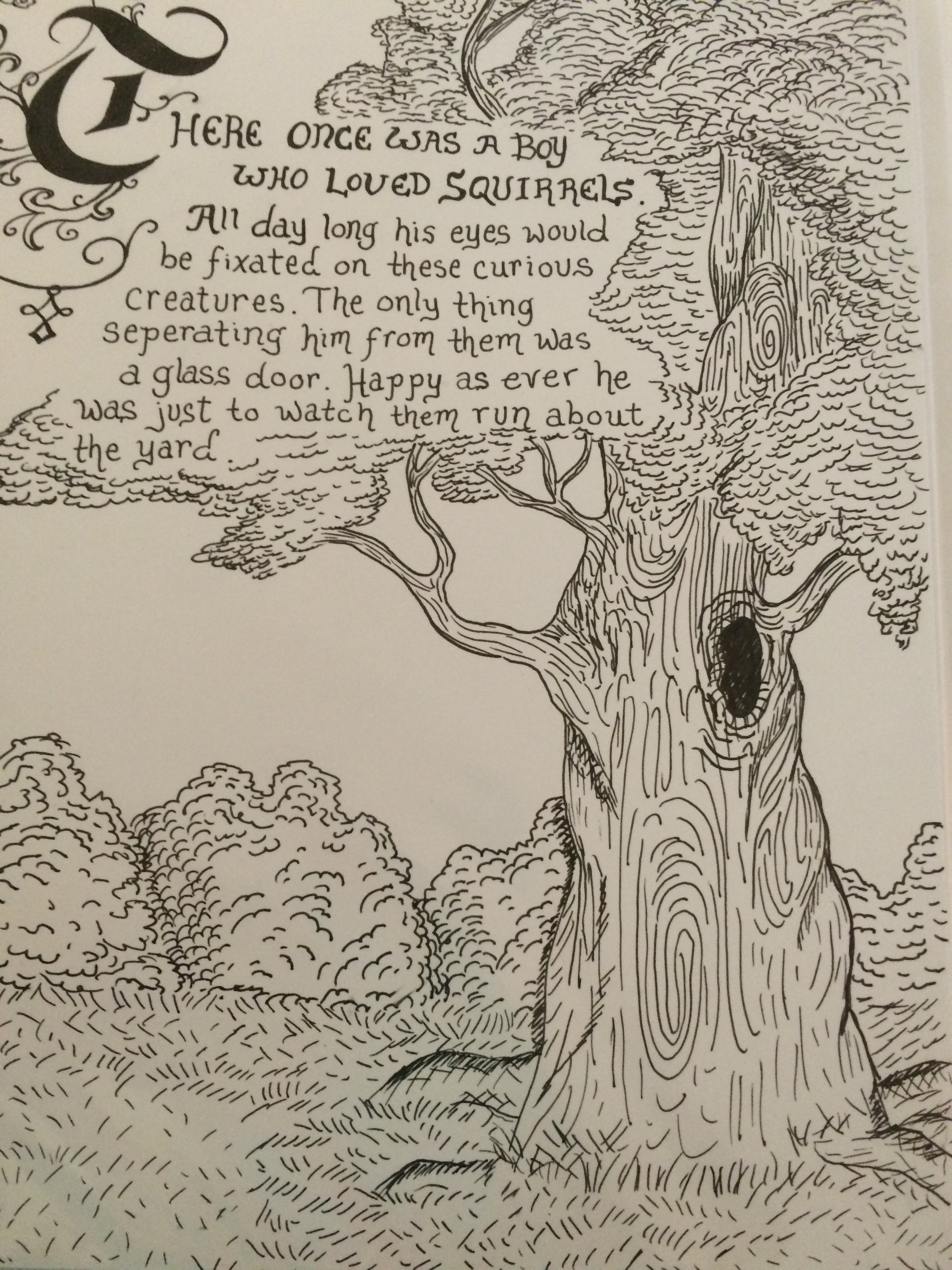
He recognized himself in the pages of this book, and it made him fill with delight. Someone else who loves Peeps as much as he does, this character. I’m not sure if I should tell him that this particular book was inspired by him in the first place. My brother wrote it and my future sister-in-law illustrated it with him and his love of squirrels in mind. So the Peep was intended as a nod to him from the beginning, and when they saw him see it for the first time, they both lit up.

SquirrelSquirrel 2

Seeing yourself in art never gets old. To see a piece of what you know and have lived reflected back to you, to see something that felt important to you lovingly captured in photos or drawings or poems or songs, it is a kind of magic. The kind of magic that makes you feel less alone and less apart from the rest of the world.

The End of Kindergarten

Giraffe

I’ve been noticing more about my youngest child lately. I’ve been paying more attention to him, taking mental pictures more often, remembering cute things he does more often.

He just turned six. A few weeks ago he held my hand in the parking lot as he clacked along to soccer in his cleats. He held onto his water bottle and kicked his size 4 soccer ball down the path. My purse was slipping off my shoulder and under my other arm I tried to press sunscreen and another water bottle and bug spray to my body so that they wouldn’t clatter all over the pavement. At the edge of the blacktop he kept holding onto my hand. A bolt of lightening hit me saying, “He might never do this again, he is so close to not needing or not wanting this anymore.” I struggled to keep holding onto him as long as he would let me, even though everything else I had kept falling.

We only have a few weeks of school left, a few weeks where it is just him and me all morning long, just a few weeks before the time I get with him is always and forever shared with his older brother. Next year is first grade, and I have to share him with a whole series of teachers. In the afternoons I’ll have to share him with soccer and chess and whatever else interests him: new friends, books, computer games.

These are the last few times I will take him to the library on a weekday morning, just the two of us. These will be the last weeks of eating lunch together while watching Blue’s Clues or Phineas and Ferb or Curious George.

Today he asked me to dance around the kitchen with him.

Today we put some of his summer clothes on a stuffed giraffe while he got dressed.

Today he rode around the block on a too-small Dusty Crophopper bicycle with training wheels while I followed behind.

Today he asked if I could come into his classroom to see the baby chicks that had hatched.

Today he let me give him a goodbye kiss as I dropped him off at school, even as he asked if he could take the bus next year.

I am going to miss this so much. It won’t be the same again. I know it’ll be okay, but while I had been telling myself over and over how much it was going to be okay, I didn’t realize just how deep my sadness really was.

I have been so lucky to have had this time that I have.

So lucky. Thank you, everyone and everything that has let me have this.

But, Only Hipsters Have Triangle Tattoos

Maslow's

I am certainly not a hipster.

I also do not have any tattoos.

Yet.

But, lately, the tattoo I have been planning out in my head is a simple striped triangle. A representation of Maslow’s Hierarchy of Needs.

My teacher friends might remember this concept from back in developmental psychology courses. The basic idea is that we are all motivated by irreducible needs, and that once we meet our basic needs we are able to climb higher to try to achieve more lofty ones. The concept is framed as a pyramid.

The base layer of the pyramid contains our basic biological and physiological needs – our need for air, water, food, shelter, sleep. These needs have to be met for us to move on to the next level.

The next level up contains our need for safety – protection from danger (whether that danger is a poisonous snake, a tornado, or a criminal), law and order, stability.

The level after that contains our need for love and belonging – friendship, affection, intimacy, romantic love, family.

The level after that contains our need for esteem – self-esteem, mastery, achievement, independence.

The level after that contains our cognitive needs – stretching our brains, learning, finding meaning.

The level after that contains our aesthetic needs – appreciation for, the search for and the creation of beauty.

The level after that is our need for self-actualization – becoming the highest version of yourself you are capable of becoming.

The last level is the need for transcendence – overcoming the limitations of human needs and human forms. It is complete spiritual fulfillment.

This seems like an orderly way to explain the motivation of human beings, that once the bottom rung of needs are met then we can seamlessly turn our attention to the next level and so on and so forth. When I turn back to this model in times of chaos, it provides me with a way to get my life back under control. When the pain or fatigue or depression that can be associated with fibromyalgia begin to severely limit my ability to function, I go back to the pyramid. I go back to the basics and make sure I take care of each level I can in order. It helps.

It also gives me an organizing principle for deciding what is most important for my children, for my family. Food, water, sleep, shelter first. We are very lucky that the first needs are securely taken care of. Safety is always next. This is such a part of our life that I can yell out to them at any given point, “What is my number one job as your mommy?” and they will yell back, “To keep us safe!” If there is a question of priorities, those win.

It helps stave off bad behavior, usually. Most tantrums come about when basic necessities are off – the boys haven’t eaten in a while, they stayed up too late, they feel sick and need rest and medicine. My youngest had a tantrum this morning because his need for safety was not being met to his liking. He thought he would have to get a shot at his doctor’s appointment when he did not. Once he felt safe (all of his vaccinations are up to date and he needed no boosters) the rest of the day fell into place.

This helps me prioritize what charities we support with the little extra we have. Charities that feed and clothe and shelter people get our attention first. Charities that keep people feeling safe and loved next. Charities that teach after that.  If you can do all of those at once, even better.

I taught in a public school and can tell you first hand how difficult it is for a child to learn if his basic needs, his need for safety or his need for belonging are not being met. Any programs that provide breakfast and a safe environment should be protected. Any wonderful people who can make a student feel like he or she is meant to be right there with them, who can make a student feel safe and accepted, should be truly appreciated. Then mastery and learning can happen. Not before. The pyramid as an organizing principle makes sense again.

But, and this is very, very important, we as humans are not always orderly. A shock, I know. We sacrifice having basic needs met to hit those higher levels. There are examples everywhere. We lose sleep night after night after night going for a promotion. We eat a plate of fries when the problem is not that we are hungry, but that we are lonely. We let obsessions with mastering a level on a video game run over our loved ones. We skip meals to fit into a gorgeous dress because we want above all else to be beautiful. We often choose to meet needs out of order.

And, if under extreme circumstances there is little to no possibility of having our basic needs met, we strive to fulfill any of the needs we have any chance of meeting. Gang members may find their need for belonging is stronger than their need for safety. During unspeakable horrors like the Holocaust, people have turned to learning and appreciation of beauty as the only needs they could fulfill or help others fulfill. Countless people have had to look at transcendence as the only need they could hope to meet in the midst of war or starvation or natural disaster. Our needs are irreducible.

I want a visual reminder that every person alive on earth has real needs.   A reminder that my needs are real, that the needs of other people are real, that meeting those needs is imperative. I want a reminder that this organization of those needs has often helped me and others, and I feel anchored by it.

I want a simple, striped, triangle tattoo.

I also would really, really like it if this tattoo didn’t also scream to the world, “I wish I were a twenty-something hipster who loves the clean lines of geometric shapes” when I am really a thirty-something conventional mom and former educator who actually prefers photo-realistic tattoos of things like flowers and insects and birds.

But,

That isn’t a real need.

Inspiration and Execution

Sunday Morning

A conversation with children at 7:00 AM. It is a chilly winter morning, and two young boys ages 8 and 5 beginning interrogating their harried mother.

Youngest: Don’t we have any dreidels?

Mother: Well, no. We don’t.

Youngest (cries as if heart is broken)

Mother: What on earth???

Youngest: I want to collect dreidels.

Mother: I…uh…huh?

Oldest: So I just made up this drum set. How long did Fleetwood Mac practice before they were rock stars?

Mother: I…huh…what? Do you mean Mick Fleetwood? I don’t know, what did they say on the show?

Youngest: (still crying)

Mother: (switching attention rapidly between one child and the next) Ok, kiddo, we just don’t have dreidels. It’s not the end of the world, sweetie, really it’s not.

Oldest: Wanna hear my new song I made up? Can I take drumming lessons? How long do you need to take drumming lessons?

Mother: I…uh…huh…what?

I have to be careful what sorts of TV shows I watch with my kids. It is not about violence, or sex, or even foul language. The above transcript comes from a morning where my boys watched a recorded episode of CBS Sunday Morning with me. This episode featured interviews with Mick Fleetwood and an older gentleman who owns the world’s largest collection of dreidels. Other episodes convinced the boys that they wanted to sculpt huge sandstone caves, create street art, start a bakery, and become comic book authors. Some days I am not up for how excited the boys are.

Mother: (just too tired to think straight) That is IT! We cannot do everything! These people, the people on these shows spend their whole lifetimes doing what they do-we CANNOT replicate what they do in the space of a morning. We are not going to pout about it either. Just, everybody CHILL OUT!

But, most days, I am able to appreciate the way a segment on a show can ignite their imaginations. And I am a little jealous. I have found them designing huge pumpkin sculptures (with trick-or-treat buckets and stuffed animals) after watching Halloween Wars. They’ve made River Monsters out of Legos and blocks and boats out of kitchen chairs. We made a turkey-shaped sugar cookie at Christmas because a contestant had on Holiday Baking Championship. Every room of the first floor was commandeered recently for a live-action game of Boom Beach that went on for two hours.

Come to think of it, it really isn’t just TV shows. Sometimes it’s video games, apps, zoos, restaurants, songs, books. Everything can become a game, or a new dream to pursue, or a book they need to write.

One of my favorite days was right after we had been to The Museum of Science and Industry. We had seen the recovered submarine U-505 there. The next day they decided to play Battleship, which seemed reasonable as we’ve had that board game forever. When I came into the playroom, they had set up a fortress wall that divided the whole room in half. Homemade boats studded the sea of carpet. They threw stuffed animals at each other to sink the other person’s makeshift navy. And once a boat was sunk (they assured me no one on board was hurt) the boats were hauled away to be “museumed”.

I miss childhood and the way you can run off with an idea as soon as it pops into your brain. I get tired of having to postpone a project for dirty dishes, e-mails to the boys’ teachers and calls to refill prescriptions. I’m tired of waiting weeks and weeks between inspiration and execution. I’m frustrated with rainy days and budgets and tax appointments and laundry, but I suppose most adults are. I try not to let my jealousy peek out too often, because I am absolutely glad that this is something the boys can have, that I can give them now. As adults, as far as I can tell from myself and most other adults I know, they’ll still get a million ideas but they will have less time to actually do anything with them.

This post, alone, has been a nebulous idea that has floated around in my brain for at least a year and a half. And I have had a stolen hour Monday and a half hour this morning to get anything that made any sense written down. And that was only available because the boys saw a YouTube clip of a Hot Wheels track in a bathtub that they wanted, on Monday night, to try for themselves.

Pokemon Cards and Competition

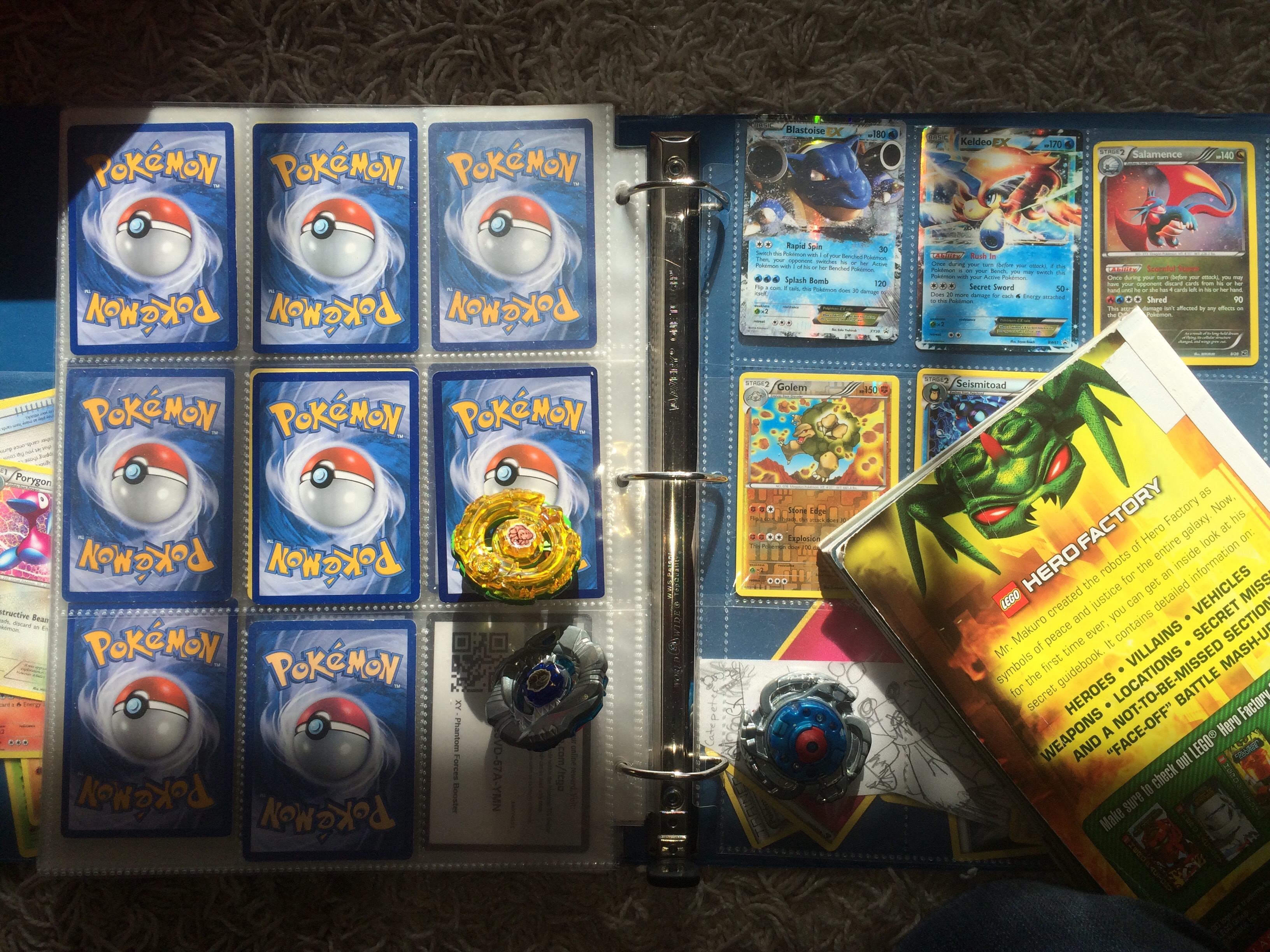
Pokemon

The games and toys that my two boys play with most often all have one thing in common. They all involve a huge cast of characters who must do battle in one form or another. Whether in video games like Skylanders or Super Smash Brothers, or as tangible action figures from Lego’s Hero Factory, or as spinning tops called Bey Blades or in their huge binders full of Pokémon cards, my children know each and every one of these competitors and how they perform in competition.

Do you by any chance know who Pop Fizz, Ninjini and Eye-Brawl are? How about Preston Stormer, Ogrum or Von Nebula? Charizard, Pidgeot or Gangar? I kind of know who they are, but my eight-year-old and my five-year-old could tell you exactly how they attack, who they attack, how much health and stamina they have and what are their main weaknesses. And there are hundreds more that they can describe in such detail. When they give me lists for Christmas or their birthdays, it becomes a long string of gibberish to my ears as they rattle off the characters they still need. I nod as if I understand. A lot. The once-in-a-blue-moon occasion that I remember some of these details leads them to believe I really am paying attention. Sometimes, sort of.

I didn’t play these games as a girl. I tried to decide if that was because I was a girl. I had traditionally feminine, gendered toys I loved: baby dolls, dress up clothes and a pretend kitchen. But I also had many that were not specifically “just” for girls: balls, bats, musical instruments, puppets, paints, roller skates, bikes, a microscope and even Pipeworks (a set of PVC pipes you joined together to make forts). I look at the playtime choices I made among the choices that were given, and I see that I practically never, ever chose something competitive. There was almost never a winner or a loser, no one was ever glorious in victory or saddened by defeat. That wasn’t a part of my play, or of my imaginative world. I anticipated my baby doll’s needs, I squished play-doh, I made up dance recitals in the living room and pretended to be trapped on a desert island in a version of Survivorman meets playing house. I looked at leaves pressed between slides. I made up restaurant menus. Fighting, battling and competition weren’t there.

Why weren’t they?

Competition, and the desire to win at all costs, was considered a scourge as I grew up. Perhaps it was reactionary to the 80’s corporate culture, and a byproduct of the 90’s focus on diversity and inclusiveness. Maybe I had the message reinforced for me in church and school and home that caretaking, cooperation and empathy were far more valuable traits to cultivate. And maybe those traits were emphasized more strongly because I was a girl. And maybe, because I definitely wanted to be seen as a girl, I took to it. Or maybe those qualities were what I was naturally good at, anyways.

I look with curiosity at my children’s obsession with competition games. I am trying to parse out whether there is a problem with this play, because it looks so different with my own. The bottom line: I don’t think there is.

There are gendered expectations put on boys that they will have to engage in competitive activities. There are biologists who are fairly certain that competitive activities go hand in hand with testosterone. There are plenty of men and women I know who (gasp!) actually enjoy competition through sports and games and career-building. While I’m sure I could cite many examples of competitive spirit that went far, far over the line, I believe that the problem arises when it is taken to an extreme.

So, my boys are gearing up to be competitive creatures and to enjoy it. What lessons about competition are my kids taking away from Pokémon cards, specifically?

They are exposed to the idea that every competitor has unique skill sets. No one character is identical or has identical attacks. The diversity of successful competitors, from the cute and cuddly Pikachu to the enormous Mammalswine, gives credence to the idea that there is not just one successful archetype. Success, even in a narrowly defined arena, can look very different.

They are also familiar with the concept that every player has specific weaknesses. These weaknesses may cause them to take on more damage in a fight, if they are attacked in their vulnerabilities. However, everyone has a weakness. There is incentive to carefully choose whether to exploit that weakness for personal gain or not. The boys know that they could be exploited themselves. They know, too, that their weakness is normal and not necessarily of harbinger of defeat.

They watch DVDs of Pokémon exploits where battles are ethically constrained. The Pokémon practice their skills to improve. The trainers must acknowledge the feelings, health and well-being of their fighting Pokémon. The Pokémon themselves enjoy pushing themselves to learn a new move, but know when to rest. Wins and losses are accepted with grace.

And this is similar in all these competitive games they play: the diversity of skills and weaknesses, the need to rest and recover between matches, the impulse to improve, the good sportsmanship of winning or losing with integrity. In a world where (hopefully) healthy competition will strongly shape the lives of my two boys, I am happy they have found fun ways to learn how to navigate that world

What Are You Afraid Of?

Alien

“There was this incredible crashing noise, like a huge stack of heavy boxes falling over. I went running around the house making sure no one was crushed and never found what it was. Then it happened again that same night. Again, nothing had actually fallen over.” My brother is one of the first people I tell strange phenomena to, because he is the likeliest of all my family and friends to explore all the possibilities with me.

“Whoa. Ghost?” He seems concerned, but practical.

“Maybe a poltergeist?” I actually sound a bit hopeful.

“That doesn’t seem like it would be comforting.”

“But it is!” I can sense my brother raising an eyebrow over the phone, “Poltergeists, well according to Wikipedia, tend to be manifestations of one person’s stress. So, I just need to relax. If it’s a ghost or something then I have no control over bumps in the night. This way, I do!”

“Yeah, still not a comforting thought.”

I would rather have a poltergeist in my house than a ghost. My brother would rather a ghost than a poltergeist. My oldest son, when asked if he was afraid of ghosts one Halloween, furrowed his brow in confusion. “Ghosts are just dead people,” he said. Seeing as he is generally not afraid of live people, this makes sense. But it doesn’t.

Fears are so idiosyncratic. I used to believe that every fear someone had made sense, or had a contextual backstory that explained it away. I am scared of crossing train tracks. I live in the suburbs of Chicago and there are a whole bunch of Metra stations and tracks everywhere. I had heard stories of people dying at crossings. When I was a child in the backseat of a mini-van, I had no control over the speed of our car or when I could cross to safety. When I have had to walk over tracks, I am painfully aware of how slow and clumsy I am.

I am scared of large dogs because for a few summers I worked as a mail carrier. A huge German Shepard that roamed an otherwise empty house day in and day out lunged for me and ripped through a screen next to my head.

I still have nightmares about velociraptors because of Jurassic Park.

These fears make sense.

But I am scared of heights with no clear reason. Arriving late for almost anything starts a low-level anxiety pit in my stomach that can grow quickly to fill my chest cavity. I can swim, but drowning fills my nightmares.

I’ve come to realize that some fears have no clear context, that maybe the quirks of what we fear are largely inborn. Just like our favorite and least favorite foods are decided by a mysterious combination of the chemicals in our brains and the way we’ve been exposed to snacks, maybe our fears work the same way. Some make sense and others don’t.

Take my two sons. They are only two and a half years apart. Almost all of their formative life experiences they have had so far in this world have been together. Raised by the same people, taken on the same vacations, enrolled in the same school, exposed to the same movies and TV shows and video games, they probably have more similarities than differences. But…

The oldest hates rollercoasters, but loves huge water slides.

My youngest loves rollercoasters and HATES water slides.

My oldest is afraid of spiders and heights.

My youngest will be going to a camp this summer mostly to see spiders, and climbs to the top of every playground.

My oldest went water tubing at the age of six and stayed out behind the pontoon boat as long as we would let him.

My youngest, sitting on the boat, absolutely refused. But when he saw teenagers jumping off cliffs into the lake he asked if he could, too. At four.

At the very least it fascinates me to know that for almost every fear we have, rational or not, there is probably a counterpoint. For every fear that has us paralyzed, there is someone who is just amazed or thrilled by it. And the things we take for granted as manageable (I am not afraid of dentists or doctors or public speaking, for example) could be terribly daunting for someone else.

I have always been terrified of the idea that aliens may exist. I want to watch shows about it, but find myself chickening out at the last moment. At any given time there is probably an episode of Ancient Aliens waiting for me in the DVR, biding its time until I am brave enough to conquer it.

My oldest, at eight, has commented on that particular fear of mine.

“I am much more worried that there are no aliens. That will really are alone in the universe. That scares me. We’re the only ones alive in the whole universe? Totally by ourselves?”

I consider this for just a second. “But, what if they are dangerous or evil aliens?” I ask because that is the only possibility I can imagine. “If those are the only creatures who are out there, that doesn’t seem very comforting.”

“But,” he looks at me with that furrowed brow again, “it means someone else is out there. It is.”