I Overdid It

Overdid it

I overdid it.

I was suddenly gifted six hours a day where child-care wasn’t my primary objective. For the first time in nearly nine years, I was responsible for the well-being and care of my offspring for only eight hours of the fourteen they are awake each day.

Or, as someone else might reference it, both my kids are in full-day school.

I absolutely did not want to squander this opportunity to do everything, everything, I have been meaning to get done for the last nine years. And apparently I thought that all should be accomplished within the first three weeks of the very first school year that this free time has appeared.

Goals, dreams, accomplishments: I would soon have them all within my grasp!

  • Showering every day-Check.
  • Exercising every day-Check.
  • Writing every day-Check.
  • Taking care of e-mails and phone calls in a timely manner-Check
  • Putting things away so that our house looked less like a clutter-bomb exploded-Check
  • Making a healthy breakfast, lunch and dinner-Check.

They were good goals, attainable goals. But then I got greedy for more: more polish, more perfection, more poise. I have all this time now, don’t I? Shouldn’t I be capable of all these things and more? What, with all this free time and what-not. So I began adding to the to-do list, the accomplishments I needed to have under my belt by pick-up time.

  • Showering every day AND drying my hair AND shaving my legs AND moisturizing AND putting on make-up AND putting on a flattering outfit.
  • Exercising every day-but in order to count it has to be new and challenging and has to keep my muscles guessing and be intense and must lead towards the goal of becoming ATHLETIC.
  • Writing every day. Writing blog pieces and long pieces and cover letters and author biographies. Submitting to as many publications as I could. Researching and reading the archives of every respectable magazine I can get my hands on.
  • Taking care of e-mails and phone calls that both include current issues and issues one, two, three months out.
  • Putting things away, scrubbing all the floors, dusting every room, washing all the sheets and the pillows, going through the closets, cleaning out the car.
  • Making healthy breakfast, lunches and dinners, snacks and treats AND making the outrageous claim that I would try to make sure we never had fast food on a soccer night (which, by the way, is four out of five weekdays).

I bought blush for the first time since my wedding eleven years ago. I doubled my exercise sessions and tripled the steps I take in a day. I decided I should make the one free weekday afternoon I have with the boys a cookie-baking day, just because my youngest loves baking and we never do it and WHY NOT, I’VE GOT ALL THIS TIME TO MYSELF NOW!

And I am burned-out.

I forgot that I still take care of the boys at least eight other hours a day. I forgot that my husband still travels for work almost every week. I forgot that I have multiple chronic illnesses (hypothyroidism, fibromyalgia and hypoglycemia) that I have to carefully manage. I forgot that I was human. That I might have a bad night’s sleep, or a disappointing setback, or a moment where my body has just given up on me, or a minor argument, or even a just a pimple.

I seemed to think that this extra time to myself was a magic wand. If I coupled it with diligence and effort and not being afraid of planning and experimenting and rolling up my sleeves, I would be unstoppable.

Yep. Except for writing this, today I am pretty well and fully stopped. It’s a high pain day, and my hands and feet are cramped and curled up on themselves unless I push them flat. My head is pounding and my shoulders won’t un-hunch. My body likes to remind me when I’m being a bit foolish and unrealistic.

My body likes to tell me when I am being too hard on myself.

So, I’m going to try to find a few of those six hours today to rest, and regroup, and take a deep breath. Why not? I have all this time to myself now.

Pain and Joy

willis tower

This essay was intended as the beginning of a monthly column, a pitch for a well-regarded online literary journal.  As I mapped that series out, I decided that these were ideas I wanted to write about regardless of whether they were accepted and published elsewhere.  They weren’t picked up, which is disappointing, but I’ve decided that the first Wednesday of each month will be when I continue the column for myself.  That’s my intention, at any rate, and we will see how that goes.  Thanks!  

My two sons, Nicholas and Christopher, are eight and six respectively. My chronic illness began when Christopher was just a year old, so by all accounts they have known a mother with pain far longer than they have known her without.

The first blood tests were drawn out of my fat, left-arm vein when Christopher was still small enough to fall asleep in his car seat and was portable like a piece of awkward and heavy luggage. Nicholas was squirmy and independent at three, and I couldn’t trust him to not run through the parking lot if I let go of his hand. Christopher swung from my left arm and Nicholas from my right, and I shouldn’t have gotten the three of us from the doctor’s office to our car that way. I bruised an ugly purple in the crook of my left arm later that night.

That was the beginning. Tests for diabetes and allergies and rheumatoid arthritis followed, as well as screenings for ovarian and colon cancer, and an MRI to look for multiple sclerosis. I was eventually diagnosed with fibromyalgia: a disease of exclusion. The answer to my near-constant pain and overwhelming exhaustion was a non-answer because fibromyalgia has no known cause and no cure. The term “fibromyalgia” might really be an umbrella over several linked but separate illnesses, or it might have its own pathology that hasn’t been discovered yet.

For at least five years I fought every day to mitigate the pain I felt and the pain I thought I might be causing them by being a mother who sometimes couldn’t. I fought to minimize our pain as a family and that became my full-time job. I was a stay-at-home mother for both Nicholas and Christopher their wholes lives, but my real work was to track down the root cause of why any of us were hurting.

I have become very, very good at spotting pain from a distance of space or time. I can hear Christopher’s tone of voice change across an entire playground if he is starting to get so agitated that he might hit a friend, and I know that once we have missed three nights of bedtime stories in a row Nicholas’s shoulders will round and slump in defeat and loneliness. I am honed in on pain, and aggravation, frustration and tears and the fleeting expressions that betray those emotions. This was something I could do, I could see pain as clearly as I could see the color of someone’s hair. This was a way I could still help, even from the couch. I had information about how to mitigate pain in many different forms, from migraines and cramping muscle spasms to loneliness and perfectionism. What I didn’t yet know, I found out. What I did wrong, I corrected. What I knew, I shared as often as I could. I found a way to contribute.

Over time, one of my symptoms became more severe. It wasn’t so odd that suddenly my limbs felt like they were filled with sand, but it was odd that it was happening so often. A feeling would come over me that I could not keep my body upright and that I had to lay down immediately. When I realized it was often after I ate, I researched that combination. Reactive hypoglycemia seemed to be the reason why: after eating too much or too much of the wrong foods my blood sugar would spike too high, prompting my pancreas to produce too much insulin which would make my blood sugar sink too far down. Since I have done stranger things than eating small regular meals and avoiding sweets, I decided to try a hypoglycemic diet.

More good days than bad, was how I had been describing my fibromyalgia. But the good days still included wild fluctuations of anxiety and depression. The good days still might mean that I fell asleep on the couch for an hour when I didn’t even realize I was tired at all. The good days meant that I didn’t growl all through soccer practice, but I might growl a lot when the boys took too long in the bathtub afterwards. Then a bad day included a Mother’s Day where Nicholas asked me over and over again what special thing I wanted to do and eventually I hissed at him, “I don’t feel well. I don’t know if I’ll still feel this bad all week and I cannot afford to feel bad all week. It’s my Mother’s Day, what I want is to clean up the kitchen, to put the laundry away, to take care of chores now. I want to know that we’ll be fine for the rest of the week. That is what I want. Is that all right with you?” Something had to change.

I changed my diet, and I felt good. Actually good. It lasted longer and longer. I felt better and better. My good days now included spontaneously taking the boys to the pool and not experiencing the gnawing fear that I wouldn’t have enough energy to now make it through the day. My good days meant fourteen hundred words of writing in one morning, when fourteen hundred would have been a stretch for an entire week. My good days meant I could tickle Christopher and wrestle with him and not hide the tears that would have normally stung my eyes seconds before I would have had to tell him, “I’m so sorry, but I can’t anymore. I’m hurting too much.”

I had lived so long mitigating pain and had become so adept at devising strategies to cope, it was the skill I had honed the most. It was a skill and a body of knowledge I shared with my family and shared with friends and shared with strangers. It became a constant in my life: seeing and helping to ease pain. That was primarily what I did, all day long.

All that time I was a student of pain I wasn’t necessarily a student of joy. I felt fairly certain that joy was, for me, obtainable only in small measures, and I felt content looking for it in small places. On a daily basis joy meant, simply, less pain. If I could achieve that for myself or anyone else I was happy that the limited amount I could do, I did. Now I have passed that limit. I feel much, much, much better. A part of me feels guilty that I do. A part of me wants to learn joy.

I want to share with you what I have discovered about pain. I don’t want the five years I spent in pain, the majority of my children’s lives, the primary hard work I did during that time to become lost. There are times and situations where less pain is the only joy you can reach for today.

And I want to share what I am learning about joy. Because I want to share joy.

Becoming a Hobbit This Summer

I haven’t posted much for June, and I apologize. Things have shifted and changed around here with the seasons.

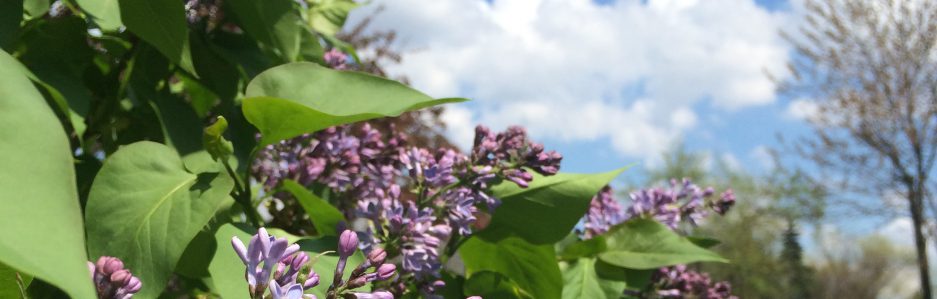
Our peonies came and went, huge fluffy pom poms of pink that were delicately soft for being so big.

I swore like a sailor when I found standardized testing “practice” workbooks in the usual end of the year backpack debris field. They were brand new, and I suspect the school wants us to use them. I growled, “I taught, if I believe that you sitting down to do these workbooks is more educational than the other things we plan to do this summer, we will do them. If I don’t, we won’t.” And so far we haven’t.

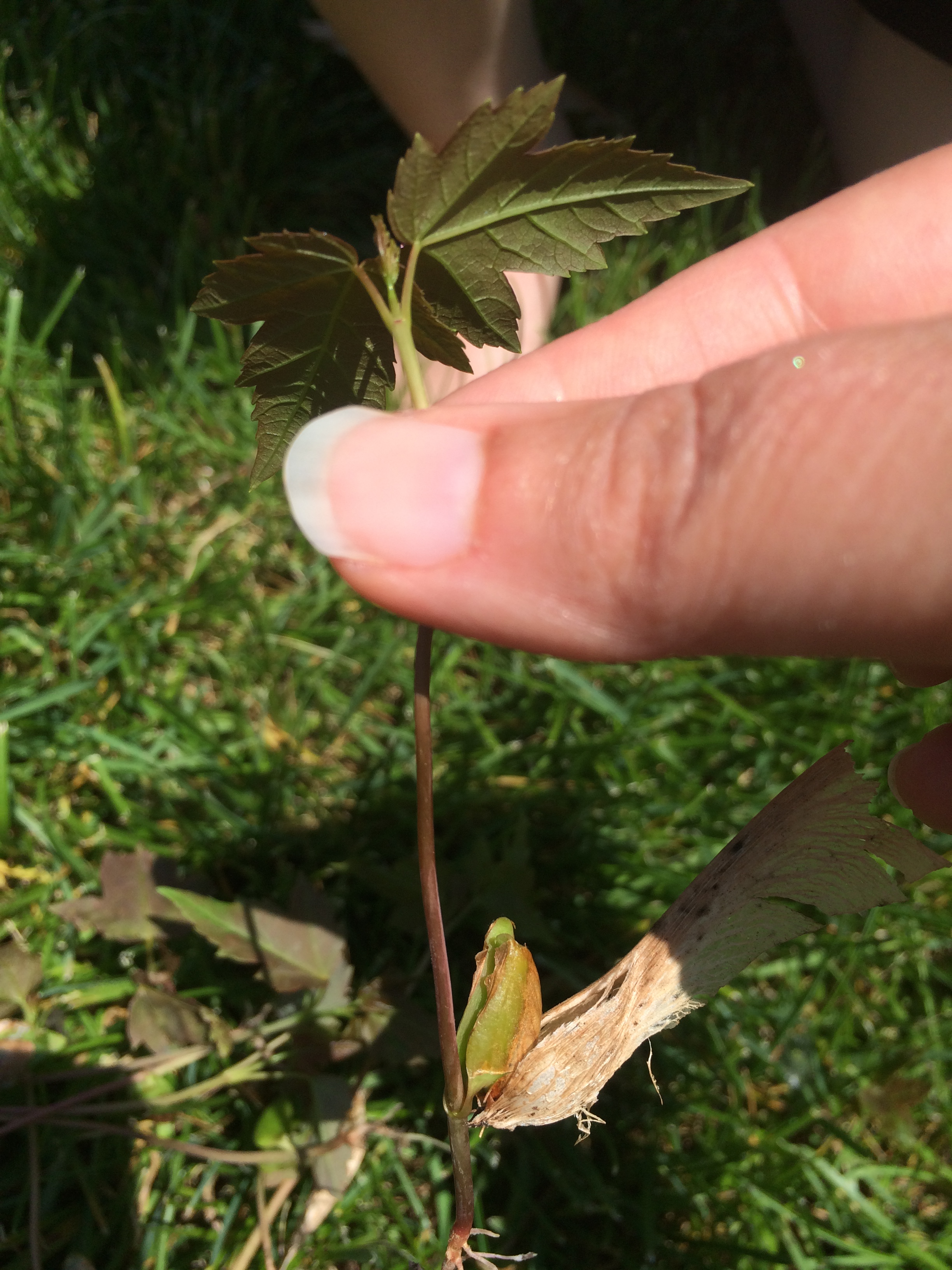
The boys and I have been very busy sitting in the grass, plucking little maple seedlings out of the lawn to see if the helicopter seeds are still attached.

maple

There are thousands of them, confirming my belief that if we all abandoned our houses, this whole neighborhood would be a forest in just a few short years.

We planted a garden and rabbits managed to eat our parsley. However the basil, cucumbers, and a variety of heirloom tomato the boys picked out only for its name “Mr. Stripey” are doing just fine. Oh, and so are the yellow tomatoes we planted named, like a character out of West Side Story, “Lemon Boy”.

Other changes have happened with my health, negative at first, then positive. Near Memorial Day I realized that while I always feel tired, I was falling asleep more and more often right after eating. It would be a swoon, almost a faint, where my body felt like lead and I couldn’t hold myself upright a second longer. It looked more and more like reactive hypoglycemia, a problem my doctor had casually mentioned years ago in passing, and one that fit my patterns of fatigue and anxiety almost exactly. In this condition, if you eat too many sugars or carbs at one sitting without enough protein or fiber, your blood sugar spikes dramatically and too much insulin is sent in to deal with it. Consequently, your blood sugar then drops too low causing jitters, anxiety, extreme fatigue and sometimes a confusion that seemed suspiciously like when I would experience “fibro fog”. I’ve done crazier things for my health, so I didn’t hesitate long to try a hypoglycemic diet designed to keep your blood sugar stable throughout the day. You eat every two to three hours with low carb, high protein, high fruit and vegetable but small meals. No sweets, no caffeine, no alcohol.

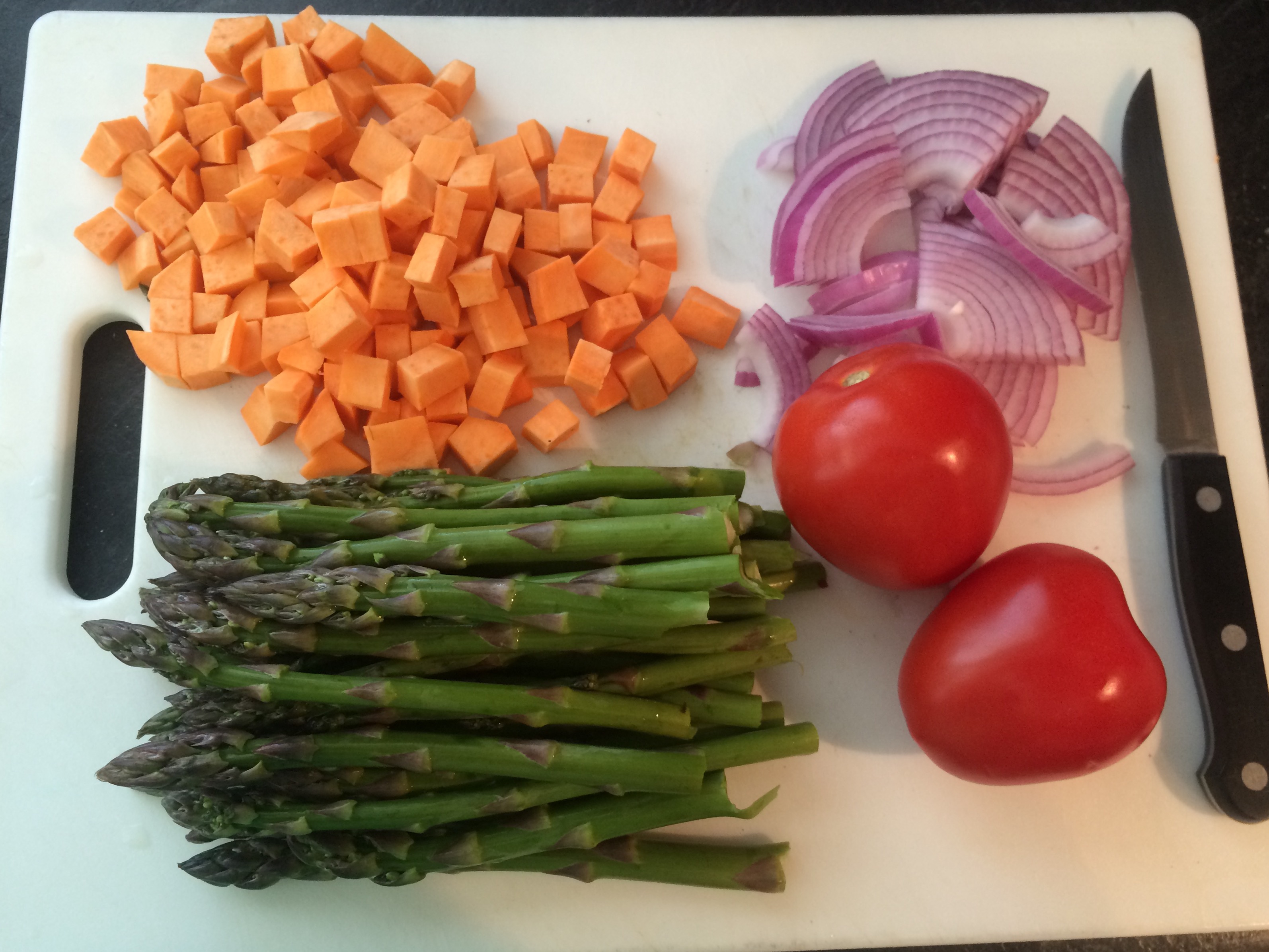
paleo casserole

I feel a lot better. When eating perfectly balanced meals seven times a day is less of a hassle than the symptoms you were dealing with before, you know you may have really been sick. When spending a day of the week making a paleo egg breakfast casserole and roasting chicken and assembling salads and taking a short break to snack on hummus and carrots actually seems like it is a bargain for all the energy you’ve gotten back, maybe you really did have a blood sugar problem.

With this change, something else has happened since the seasons have changed that I never thought would. I have been able to take the boys to the pool, and parks, and to tennis courts, and for hikes around our ponds without the fear that it would be too much. That I would get so scared for them that I would limit what they were allowed to do. That I would become an emotional wreck and start yelling at them unnecessarily in public. That I would feel so sick that I would throw up, or need to collapse, or need to rush home. We’ve spent years, and years, doing not a lot because I just couldn’t.

While I tried to focus on all that I could do, that we could do, it wasn’t nearly as much as other families could. If we went to the zoo with you, or a splash park or a playground and I seemed breezy and happy-go-lucky and fine, some part of that was always a benign lie. Getting through that outing was usually a day or so of planning to make sure it went smoothly and weighing whether the time and energy it would require was worth it. The day after was spent in recuperation, getting either my anxiety back in check or my body, all the while having to tell the boys “no” over and over until I felt well enough to handle the process again. If we did make it, know that I had weighed that it was worth it, that the pain I might have gone through to have that experience was one I said “yes” to, and I absolutely meant it. That part was sincere, if it looked like it was a light and casual thing, that part was not.

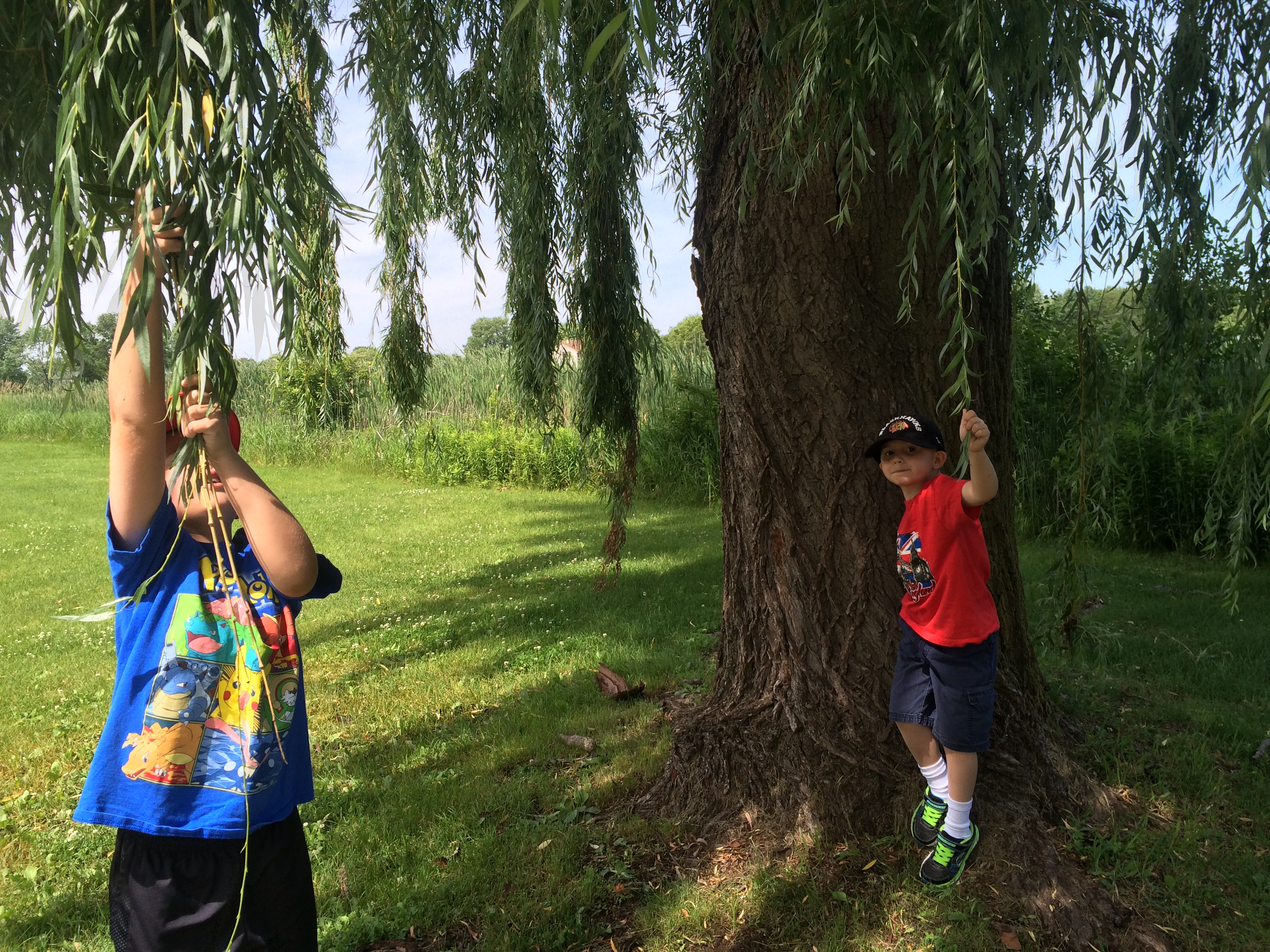
Suddenly I have the summer as a stay-at-home mom I had always wanted to have with my boys.

willow

I haven’t had to tell them “no” nearly as often. I have been able to say “yes” with just a moment’s notice, or “yes” to multiple outing in the same day. They are going to become spoiled rotten soon. I still have fibromyalgia, and still have unexplained pain. One evening I did have to tell them that I thought the water at the pool would be too cold for me, and that my muscles might cramp. They did, making it very painful to walk back to the car. But, the overwhelming fatigue is mostly gone and in a pain and fatigue disease, that is literally half the battle.

So, I haven’t written in a while because I have been finally busy just enjoying summer. And because I have suddenly become a hobbit, preparing and eating breakfast and second breakfast and elevensies and luncheon and afternoon tea and dinner and supper. I do find myself walking barefoot through the long soft summer grass more than ever before, and I have always been fairly short.

Of Solar Flares and Other Things I Can’t Control

Chronic illness demands a lot from you. It demands nearly round the clock attention, a humming background of vigilance all day, every day. On the surface it may appear that you are baking a cake, or watching a TV show, or playing a board game. Deeper down you are noticing, noticing, noticing. Is this symptom new? Is this symptom a problem? Did I do something wrong? Do I need to adjust what I am doing now, or my plans for the week, or my plans for the rest of my life? Should I trust this bad day is temporary? Should I limit my dreams for my future so that I am not perpetually discontented with what I have? Should I keep dreaming because hope makes me happy? Do I need to act now, right now, right this very minute? Or do I have time to wait?

Should I let my noticing be more like meditation, letting myself feel, acknowledging the fear and anxiety and sadness as it moves through me and then away? Letting it float in and out as it will without trying to force happiness in and force unhappiness out? Should I cultivate peacefulness and patience in the face of uncertainty? Should I take a deep breath and also acknowledge how difficult that in itself can be?

Or should I fight? Should I punch and dig and scrounge and battle and end up muddied and exhausted but victorious?

Earlier in the week it felt as if I was being shocked all over, from thinnest top layer of skin, to deep within my muscles, to my bones. The shocks moved and traveled and paused and started again with an inconsistency that was close to maddening. It happens often. Not every day, but often enough.

The only force inside or outside of myself that seems to correlate with this sensation, the electrical shocks, the hive full of bees stinging, the sharp prickles and stabbings, seems to be solar storms. I have tracked food and activities and mood, the state of relationships with my children and my husband and creator forces, barometer graphs and humidity charts and political climate. When balls of gas suddenly explode from the sun, hurling energy towards earth that can disrupt radio towers and satellites, I feel this particular symptom.

So, should I dismiss this correlation as silly? Instead of scouring the heavens for answers, should I only scour the earth? Do I take all the energy I have and use it in looking for a different reason why, a different drug for relief, a different cause behind this debilitation? Do I notice and then do I fight? Should I act on my behalf, doing something, anything to try to make this better?

Or do I accept the energy coming in and out of my body, do I feel it without judging the waves of pain that come at irregular intervals, do I sit with as much calm as I can?

I am fairly certain that you cannot fight the sun.

Not without burning yourself up into a crisp.

Fibromyalgia Awareness

fibro courage

Hi Everyone!

May 12th is Fibromyalgia Awareness Day, and FibroDaily.com is posting stories and artwork all throughout May bringing awareness to what people with fibromyalgia go through.

I have a short piece describing what fibromyalgia has taught me, and am excited to see what other people with fibromyalgia have shared!

The link where you can find this piece (and all the other fibromyalgia stories throughout May) is http://fibrodaily.com/

Thanks!

Kristin

Vanity Mirror

Vanity Mirror

There once was a boy who had a crush on me, in 1995 or 1996, who said I looked like Jennifer Aniston. It was right around the time Ross and Rachel got together, and it was sweet and flattering and totally delusional. I have the same color eyes as Jennifer. I had her famous hair cut, and by nature my hair had the right color to it. I let my sixteen-year-old self be complimented, let myself be compared to a star and feel puffed up for a bit. I knew I would have been happier to be thought of as attractive on my own terms, but it was better than being heckled for looking mannish in the oversized t-shirts and flannel I had chosen in 1994 or 1995. Once in a while I would watch Friends and Rachel might make a face I recognized as my own, usually when she pouted or pined away or tripped up, when her face was scrunched or sad or embarrassed.

There was a drama teacher in 1996 or 1997 who was about to walk past me during a rehearsal for a musical. I was sitting, reading as I always did. My “Rachel” layers had mostly grown out and my fear that I would be taken for a boy had as well. I was wearing a larger t-shirt, biting on my nails as I concentrated on my book. He paused in front of me and said, “I have noticed something about you. You aren’t vain. The good actresses aren’t. They can’t be,” and he walked on. And I let my seventeen-year-old self be complimented and compared to a star. And some vanity crept back in with a compliment about its absence. And I let myself feel puffed up for a bit.

Sometime in 2014 or 2015, a movie named Cake was released starring Jennifer Aniston. Much has been made of how she has physically transformed for the role. She goes without makeup, her hair is greasy, her clothes dowdy, her visage twisted. In it her character is unpleasant, spiritually somewhat ugly and in constant physical pain. Or so I have read. Some people are applauding the way she abandoned her clean-cut good looks for the role, that it is a credit to her acting talent and craft. Some people aren’t as glowing in the reviews of her acting skills, but still credit her bravery in allowing her image to alter. Good actresses cannot be vain. The worst of the gossip rags exclaim how glad they are that she shows up on the red carpet as her old attractive self.

I have not seen the movie. I have seen stills from the set of the movie. I still look like Jennifer Aniston when her face is scrunched and sad and embarrassed. I still look like Jennifer Aniston, but now only when she is greasy, and dowdy and acting as if she is a woman with a chronic pain condition. The difference now is that I am a woman with a chronic pain condition, who on some days cannot help but leave the house when I am still in horrible sweatpants, matted hair and bare face. When I cannot help but grimace and cry instead of smiling politely.

Seeing Jennifer Aniston this way, this mirror of what I sometimes look like now, was ego-crushing. In this movie, she does look awful. Purposefully so, but still. So I can look pretty awful, too. Even if I don’t witness it myself, because many days I don’t even look in a real mirror, it is still there. I cried some. I growled that Jennifer Aniston wasn’t really sick, just pretending, but I was. So I might always look this way. Obsessively swiping through images, searching out all the horrible things said about Aniston’s appearance, cataloguing the disparaging adjectives, showing the pictures to my husband against his will: the tailspin I let this put me in was ugly.

Despite the compliment from my teacher, I absolutely can be vain. I don’t think I can get around that. I can give myself a break and say, “There will be some days I feel like shit. And sometimes that will show. And that is okay.”

And… despite being flattered by a teenaged boy when I was a teenaged girl, I can still decide that he was wrong, and that I look like no one but me. Mercifully I have the power to release myself from any comparisons, good or bad.

Lists

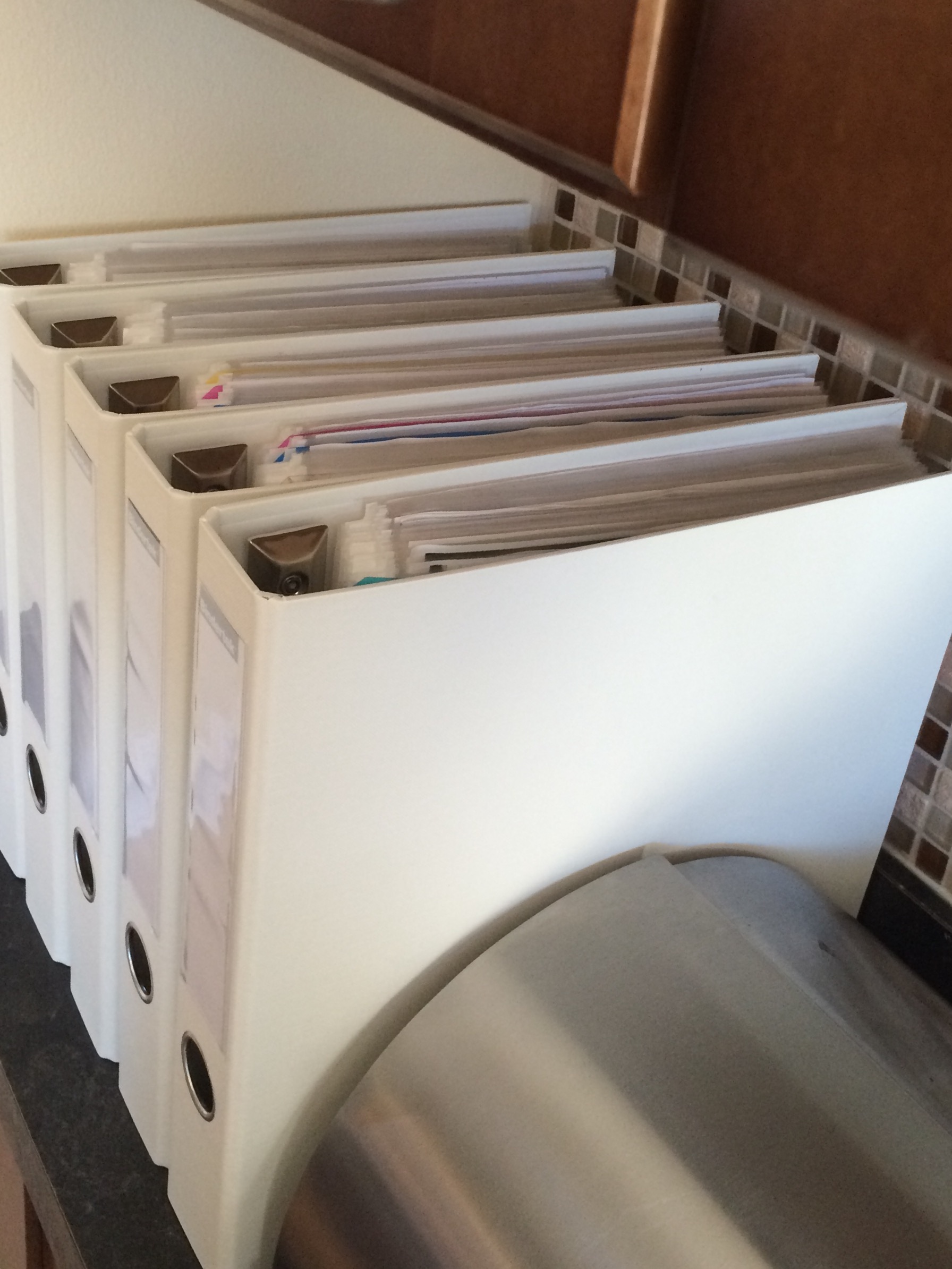
Binders

I seemed to have a difficult time making up a Christmas list this year. I had requested a couple of books (Humans of New York and one with close-up snowflake photography by Kenneth Libbrecht and Patricia Rasmussen) and nice white binders for my recipe collection (I know you are jealous! But, seriously, I love them). I remembered that my one pepper mill was broken, and there was a small charm I wanted. But beyond that, I didn’t have a grand wish list, which was beginning to annoy friends and family.

I’ve done a better job, I think, of letting myself get the inexpensive things that either I need or that would make me happy throughout the year. The cheap extra pair of sunglasses I keep in the car or my purse, so if I’m foggy and light sensitive I do not break down sobbing over misplacing the only pair I have. One extra pair of jeans, so that if laundry day is late I’m not faced with only having a dirty or chalk-covered pants to wear. A song I like downloaded on a whim. A treat purchased because I would like a treat. I don’t have the same backlog of needs or wants that I used to, and I hope do not take that for granted. I am very lucky.

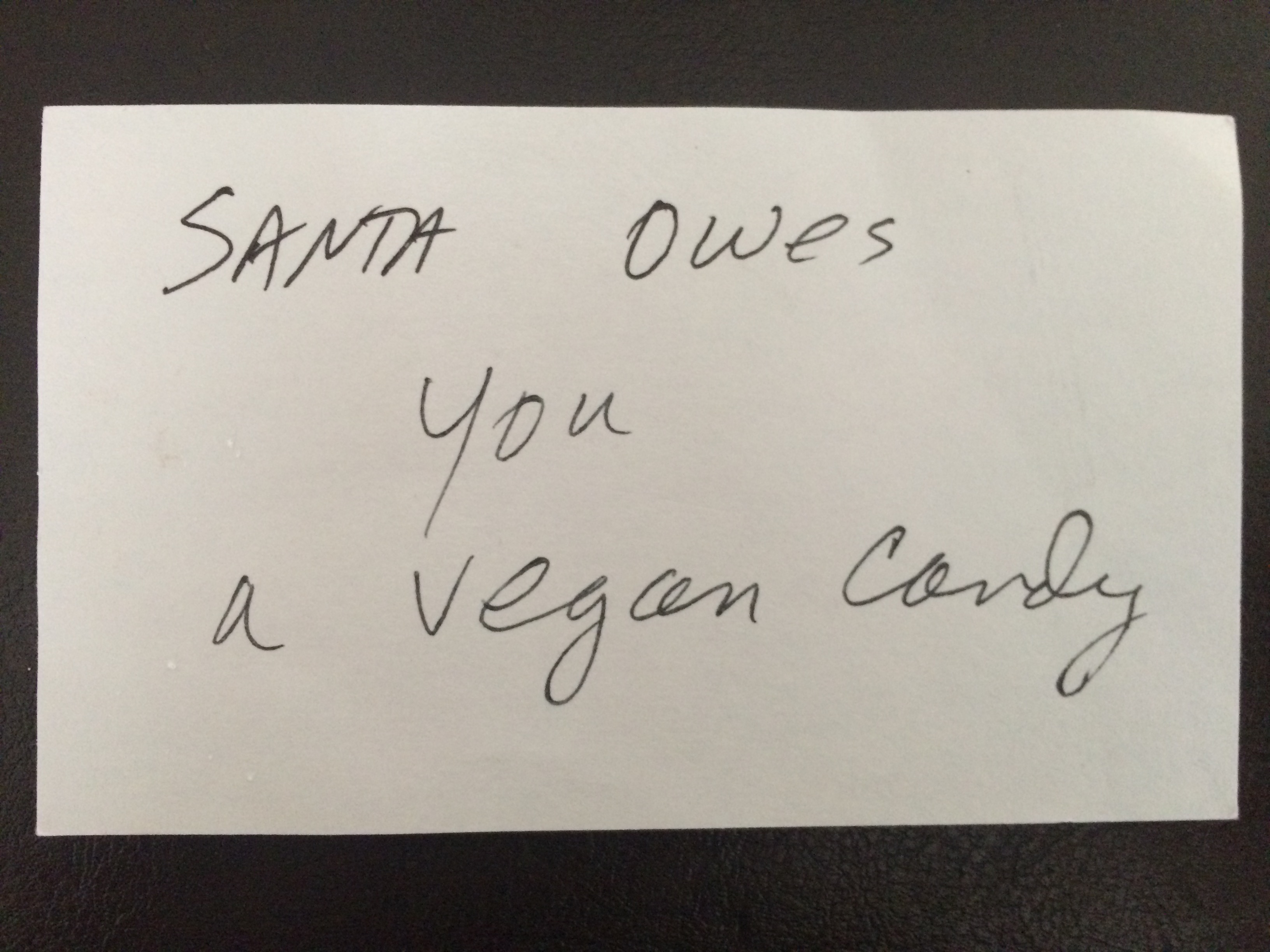
The other issue is, really, that most things I want cannot be bought or given. I really am not trying to be coy or philosophical here, expounding on the important things money can’t buy. In totally literal terms, I want dairy-free candy. Dairy-free candy is really hard to come by.

This note was even in my stocking at my parents’ house:

santa

I assured Santa that the IOU was totally not necessary, and on my end I took the time to make a ton of dairy-free Christmas cookies.

But the other things I want, no one else can get for me. If I want to feel reasonably healthy, I am the one who needs to exercise and go to bed on time. If I want to feel sane and calm I am the one who has to reflect and journal and type and prioritize and set boundaries. I get enormous amounts of love and support from my husband and kids and family to make those goals a reality, but they cannot do those things for me. So as Christmas approached my resolution list grew much faster than my gift list. Here are a few:

My Resolutions for 2015

  1. Remember that an hour spent away from the kids to exercise is better than being mentally and physically checked out for a whole day.
  2. Try not to talk about my physical symptoms so much in front of the kids. My oldest now tells us about every tiny paper cut, abrasion or hangnail he has all day long. I suspect that he sees griping about aches and pains as a way Mommy gets attention, and is replicating it. I don’t want that to be my only narrative, and I don’t want him to become a hypochondriac.
  3. Be ready to take a good hard look at why the house is constantly messy. Be ready for some hard realizations about myself and how I operate, and what I model. When I spent all my time cleaning, before, I was able to have a clean home. I don’t have time for that anymore, and need to look at not making the mess in the first place. I don’t know yet how to do that.
  4. Be brave enough to admit that I do not know how to do my hair or make-up. I probably should have learned at 14, but I didn’t, so here I am twenty-some-odd-years later wanting to figure it out and knowing I’ll endure all those teenage mistakes in front of other moms at drop-off and pick-up. I would like to look more polished on occasion.
  5. Eat less fried food. I like fried food.
  6. Remember to be me.
  7. Eat more vegetables. More vegetables that are not fried. See #5.
  8. Teach my kids about religion. My goal for next Christmas is to not be sitting in a booth at Steak ‘n’ Shake in December with my five-year-old asking, “So, who is Jesus again?” They should know, they should know the religions that shaped the world, they should know why people believe and what they believe.
  9. Watch more movies, listen to more music.
  10. Make and eat pecan pie before 2015 is out. I did not make myself dairy-free pecan pie this Thanksgiving, and I regret it.
  11. Make sure I tell the people I love that I love them more often.

The things I want most have to come from some action on my part, which is exhausting. But it also makes me realize how much power I have to shape my own life, for better or worse all year long.

Punishment

workout

I would like to add an author’s note here.  This post was written before the controversy around 19 Kids and Counting, before we knew that Josh Duggar had victimized his sisters and other young girls, before his hypocrisy in condemning homosexual couples paired with him soliciting extramarital affairs.  I could take this post down, but I still feel a connection to the idea that we sometimes punish ourselves with TV shows and Instagram accounts and celebrity reality shows, taunting ourselves with what we can’t have.  For the record, I did seem to think they were doing a good job raising children and am currently shaking my head realizing that all I knew was an highly edited version of their lives-not what really went on. 

I used to watch 19 Kids and Counting each afternoon when I exercised at our local rec center. And by “used to” I mean I watched it daily up until a week ago.

The Duggars kind of fascinate me.

Obviously, their life is very different from mine. Rural Arkansas and its lack of diversity is a different world from the suburbs of Chicago, and as a one-time public school teacher I don’t really agree that homeschooling is the way to go, and I generally wear pants and low-cut tops whenever I feel like it, modesty be damned. Their Christianity doesn’t resemble mine, especially when I mix it with Buddhism or scientific inquiry. Oh, and I have seventeen less children than the Duggars do.

They seem to be good parents. I understand how reality shows can be edited, but from what I can see they instruct their children with patience and love. They seem to be thoughtful about how to foster good relationships and how they instill values like kindness and respect and purpose into their offspring. I quietly cheer them on when I hear more kids or grandkids are on the way. These are people who want children, see them as a blessing and seem to know how to raise them to be decent human beings. I got to see babies and cuddle them vicariously as my own got older and older. I got to see how excited these women were to find themselves pregnant again.

I had to stop watching this show.

Watching it was a way of punishing myself, flooding myself with images of a chapter of my life that is closing. It is unlikely, very unlikely, that I will be having any more babies. Having fibromyalgia is difficult with two fairly independent children; I cannot imagine how much pain I would be in going back to newborn days when sleep deprivation goes on for months and months. And, according to some blood tests, the chance of me even becoming pregnant again is very low- as low as it would be for a woman ten or fifteen years older.

I have been intensely angry at my body, though I hadn’t realized it.

I have quietly and persistently been furious with my body for all of the things it cannot do. I am angry when I can’t play at the playground with my kids or take them to the pool, when at a fun run I am even slower than a three-year-old and a woman who is recovering from surgery, when I can’t stay up late without major consequences. I am furious at what I can’t have: the shoes I can’t wear because they jar my spine, the food I can’t eat because it makes pain run up and down my arms, the plans I have to cancel because I cannot do one more thing.

The babies I can’t have.

Not that I was planning on having more anyways.

Watching the off-the-charts fertility of the Duggars was a super subtle way of admonishing my body, reminding it of its shortcomings. That I watched it while exercising, which I don’t want to do but I have to do every day so I don’t feel even sicker, was the sneakiest way ever to be mean to myself.

So, I stopped.

It’s a small turning point, one that would be invisible to the people who see me on the elliptical machine every afternoon, but I think it’s an important one. And so far my body seems relieved that the activity I put it through every day isn’t rooted in so much anger and disappointment. It feels happier.

Storms

image

I have fibromyalgia. That means, for me at least, that at any given moment pain or exhaustion can take over my body and steal the rest of my day. I have little to no control over what will push me over, thugh I do what I can to delay that crash. I bribe my body with exercise and sleep, vitamins and a careful diet, meditation and stress-reduction. But I have as little control over its function, ultimately, as I do over the weather. On occasion my nerve endings send pain signals from all over my body, making me believe that I have suddenly been attacked by a swarm of bees. Or that invisible spirits have started stabbing me. Or that an electrical storm has started sweeping over all my muscles, all my bones, all my skin. I sometimes jump up or yell out from the pain. When I am home it is all right. My boys and my husband know what is happening. When I am at my son’s soccer game, and the temperature drops from 68 degrees to 48 degrees in less than an hour, when a real storm rolls in and I am trying to keep my other son warm and dry and make sure my Mom and Dad watching the game are also okay, when I am trying to remember how to do simple addition to get snacks for the team, when my oldest son gets angry at me for insisting he put on his jacket and for not asking him what kind of Gatorade he wanted, when my muscles cramp up so badly I’m twisted up in pain, when my own personal storm has started shocking me everywhere I can feel, when other nice parents are trying to keep up small talk, when something is stabbing my eyes and I want to cry but I can’t, I just can’t, not in front of the whole world, not again, it is not all right. As soon as that soccer game was done, I ran our stadium chairs and my youngest child back to the car. Threw up in the parking lot. Sat in the car and cried. Hoped no one saw that. Hoped that if they did they didn’t think the worst. What the worst is, I don’t know. A sudden drop in temperature, a sudden storm destroyed that day. There was slow, gradual recovery, but I never got the rest of that time back. I thought about that day again the other night at soccer practice as black clouds rolled in across the sky, and I tried not to panic and make myself worse. This time the clouds only opened up to a drizzle and my body didn’t betray me. I thought quickly enough to stop myself from yelling to the sky, “Why? Why not this time? What did I do to deserve that last time? What did I do to deserve this now?” Instead I was able to laugh dryly for just a second. I muttered quietly to myself or God or someone, “Thank you. Thank you for letting this time not be as bad.” Though, I would still like to know why.